
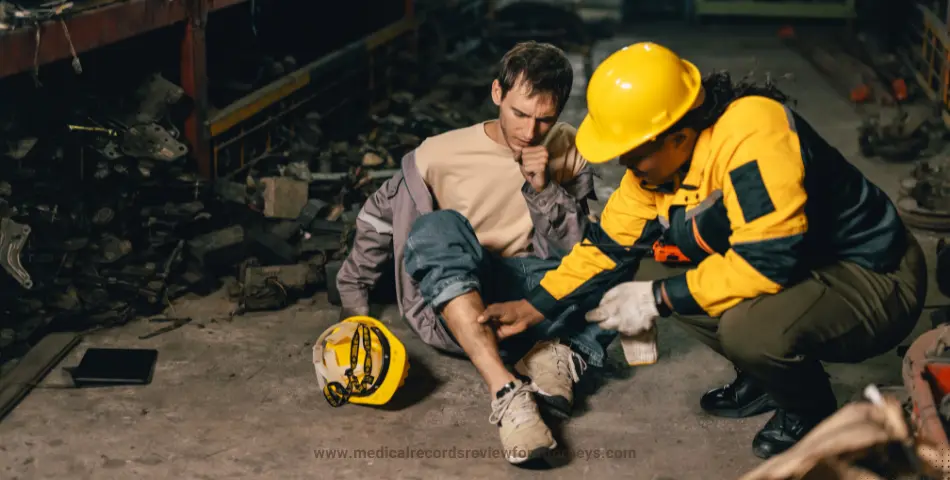
Associating Blue-Collar Work Injuries with physical labor and hazardous occupations places these workers at risk of suffering from injuries. A range of Blue Collar Work Injuries can prove life altering for workers sustaining them. Work-related injuries affect a person’s health and their financial status which in turn impacts their lifestyle and holistic wellbeing. In this case, the injuries inflicted on workers will be analyzed, the legal system surrounding the compensation pay will be discussed alongside the scope of medical record appraisal to aid attorneys fighting for workers who have suffered injuries and needless pain.
Comprehending Blue-Collar Work Injuries
Definition and Scope
• Blue-Collar Workers: Any person performing highly manual labor is a blue-collar worker. This includes people working in the construction sector, manufacturing and even the transport industry.
• Common Injuries: Commonly occurring Blue Collar Work Injuries include but are not limited to: sprains, bone fractures, repetitive trauma injuries alongside far worse types of accidents which can result in a person being disabled for life.
Statistics about Blue Collar Work Injuries
• Injury Rates: The statistics from the Bureau of Labor show that Blue-collar workers tend to suffer from Blue Collar Work Injuries at a higher rate than white-collar workers. In fact, the estimated number of non-fatal injuries experienced at workplaces per year in the United States is 3.5 million.
• Economic impact: National Safety Council highlights that Blue Collar Work Injuries is costing American businesses in excess of 170 billion dollars annually.
The Consequences of Work Injuries
Physical and Emotional Impact
• Health Complications: Injuries could result in persistent pain, reduced ability to move, and multiple long-term issues with health.
• Effects on mental health: Workers can sustain stress-related disorders such as anxiety, severe depression or PTSD due to the Blue Collar Work Injuries along with the financial burdens.
Financial Considerations
• Loss of Income: Injured workers are likely to bear the most loss in income when they do not return to work.
• Medical Costs: Financial hardship will be significantly increased due to overwhelmingly high costs associated with treatment, rehabilitation and even perpetual care.
Legal Framework for Workers’ Compensation
Overview of Workers’ Compensation Laws
• Regulations of a specific state: There are laws pertaining to worker’s compensation benefits specific to each state which define the policies pertaining to the help accessible to injured employees.
• No-fault system: Workers compensation system is a no-fault policies scheme meaning that members get to benefit even if the employee was not responsible for the Blue Collar Work Injuries that occurred.
Claims process
- Notifying of Injury: Workers must notify the employers about their injuries as soon as possible.
- Interchanging contracts: An official application needs to be made to the board of workers’ compensation.
- Medical Documentation: Accurate medical records are critical for validating claims.
The Role of Medical Records Review
Importance in Workers’ Compensation Claims
• Evidence Collection: Medical records play an essential role in substantiating claims regarding the type and severity of injuries.
• Expert Analysis: A complete review may uncover gaps or inconsistencies negatively impacting the outcome of the claim.
How We Assist Attorneys
• Detailed Reviews: Our medical records review services provide comprehensive analyses that assist attorneys in complex cases.
• Expert Testimony: We are available to provide expert testimony regarding the medical elements of the case, which will strengthen the attorney’s case presentation.
Current Trends and Data (2024)
Changing Landscape of Blue-Collar Work Injuries Sub processes
• Injury Prevention Initiatives: A growing number of companies have started safety programs aimed at reducing workplace injuries, contributing to a 15% decrease in reported injuries over the past year.
Technological Improvements
- The adoption of technology such as wearable safety equipment is becoming common in blue-collar jobs which aids in ensuring the safety of workers in real time.
Legal Changes
- Some states have recently enacted legislation extending benefits for injured workers, specifically medical treatment, and wage replacement, as well as increasing the rate of these benefits.
Case Studies
Case Study 1 Mark Thompson vs. Construction Company
- Overview: Mark Thompson is a construction worker who suffered a debilitating injury to his back while lifting heavy construction materials.
- Challenges: He was initially denied benefits because of a lack of medical evidence to support his claim.
- Solutions: Our team took it upon themselves to look into his medical records and we were able to find documents that supported his claim.
Case Study 2 Sarah Johnson vs. Manufacturing Plant
- Overview: Sarah Johnson is a factory worker who developed carpal tunnel syndrome from repetitive movements associated with her job.
- Challenges: The insurance provider disputed the claim, asserting that the injury stemmed from earlier conditions.
- Solutions: We conducted the review of her medical records required, proving that her duties at work were indeed linked to her injury.
Conclusion
The physically demanding tasks of blue-collar work can lead to injuries due to the nature of the work, and such injuries can severely affect a person’s life due to health issues. In the context of the worker’s legal system, the worker’s compensation law, as well as injury documentation, plays a crucial role with regards to medical history for an attorney. Our case study solutions assist legal practitioners in resolving the multifaceted issues surrounding blue-collar injuries, thus leading workers towards rightful compensation.