
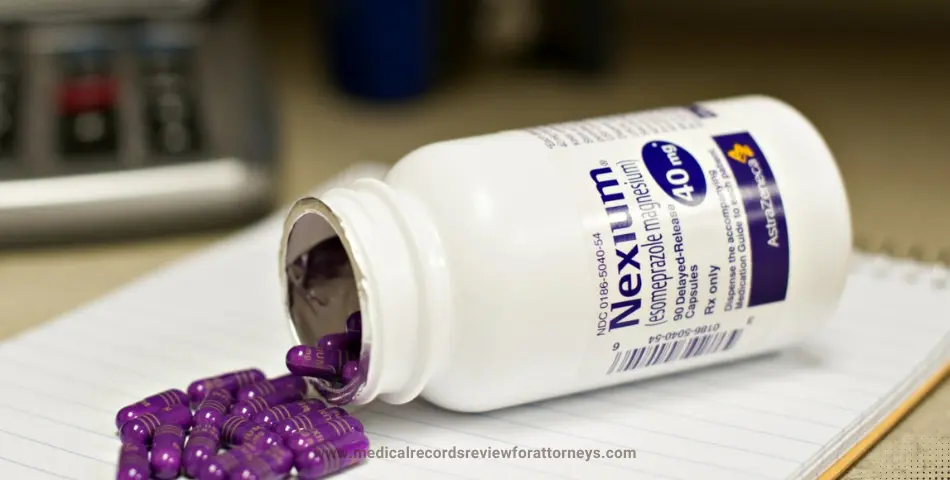
Nexium lawsuits regarding proton pump inhibitors (PPIs) continue to shape a significant corner of pharmaceutical mass tort litigation. As of October 2025, more than 11,000 PPI-related lawsuits remain active in federal court – separate from the roughly 11,000 claims AstraZeneca resolved in an earlier October 2023 settlement.
This guide now includes the latest Nexium lawsuits updates for 2025–2026, including payout expectations, ongoing MDL progress, and current injury claims.
Handling a Nexium or PPI Injury Case?
Whether your client’s claim falls inside AstraZeneca’s 2023 settlement or is part of the thousands of cases still active, organized medical chronology is what separates a viable claim from a weak one.
- Handling a Nexium or PPI Injury Case?
- Understanding Nexium and Its Medical Use
- Health Risks Associated with Nexium
- Overview of Nexium Lawsuits and Litigation History
- Multidistrict Litigation (MDL) Process for Nexium Lawsuits
- Nexium Lawsuit Update 2025–2026 (Latest Status & Expected Timeline)
- Nexium Lawsuit Outcome & Expected PPI Settlement Payout Date (2025–2026)
- Plaintiff Eligibility Criteria for Nexium Lawsuits
- Nexium Lawsuit Settlement Amounts (Past Settlements & 2026 Projections)
- Legal Strategies for Attorneys Handling Nexium Cases
- Challenges and Developments in Ongoing Litigation Against AstraZeneca and Other Manufacturers
- Conclusion
- Frequently Asked Questions
Understanding Nexium and Its Medical Use
Nexium (esomeprazole) is a very popular PPI that is used to treat GERD, stomach ulcers and Zollinger-Ellison syndrome. While Nexium is used to effectively treat these conditions, the long term risks that accompany the use of Nexium are very serious. These risks include serious kidney disease, kidney failure and even stomach cancer. These risks of Nexium have resulted in lawsuits claiming that consumers were not adequately warned by AstraZeneca, the drug’s manufacturer.
Health Risks Associated with Nexium
Nexium use over a long period of time is linked to:
- Chronic Kidney Disease (CKD): The long term use of PPIs has been shown to increase the risk of CKD.
- Kidney Failure: Long term severe cases of CKD can lead to complete renal failure, and the patient will require kidney dialysis or a kidney transplant.
- Research indicates that prolonged PPI use may increase the risk of stomach cancer.
This risk to individual health forms the basis of the lawsuits pertaining to the PPI Nexium.
Overview of Nexium Lawsuits and Litigation History
In October 2023, AstraZeneca reached a $425 million settlement to cover around 11,000 lawsuits in the United States. This settlement was intended to cover the claims of chronic kidney disease caused by Nexium and Prilosec. As of October 2025, there were still over 11,000 active PPI lawsuits — a separate and distinct group of claims that were not part of the 2023 settlement.
Multidistrict Litigation (MDL) Process for Nexium Lawsuits
The PPI lawsuits are consolidated within Multidistrict litigation (MDL) 2789 in New Jersey, allowing for the streamlining of the pre-trial process. As of October 2025, there are still over 11,000 active PPI lawsuits within this litigation.
Nexium Lawsuit Update 2025–2026 (Latest Status & Expected Timeline)
The Nexium litigation continues to remain active into 2025–2026, even after AstraZeneca resolved a large portion of Proton Pump Inhibitor (PPI) kidney-injury claims through prior settlements. While a significant number of cases were already addressed in earlier settlements, additional lawsuits are still being filed and handled across U.S. courts, particularly involving long-term Nexium use and kidney-related injuries.
Current Status (2025–2026)
AstraZeneca has already paid a substantial settlement amount in earlier litigation involving Nexium and Prilosec kidney injury claims. This resolved thousands of federal cases but did not close the door for individual state filings, new claims, or cases that were not part of earlier settlements.
Even after past settlements, ongoing or newly filed cases continue in different jurisdictions. These involve allegations such as:
- Acute interstitial nephritis (AIN)
- Chronic kidney disease (CKD)
- Kidney failure
- Long-term renal complications
Nexium remains available, and there has been no FDA recall connected to the kidney injury allegations.
Expected Timeline (2025–2026)
Because many cases were already settled, there is no officially announced trial schedule or national settlement deadline for 2026. However, here is the realistic outlook based on current legal activity:
- Attorneys expect continued filings in 2025–2026
- Ongoing cases may move through discovery during 2026
- Individual negotiations may occur
- New settlement discussions may arise, but nothing official yet
Nexium Lawsuit Outcome & Expected PPI Settlement Payout Date (2025–2026)
The Nexium and broader PPI (Proton Pump Inhibitor) litigation has seen significant developments over the years. While a major portion of claims related to kidney injuries has already been resolved through earlier settlements, not all cases were included, and some lawsuits remain active.
Outcome of Previous Nexium/PPI Litigation
- AstraZeneca previously agreed to a large settlement to resolve thousands of claims involving Nexium and Prilosec kidney injury allegations.
- These settlements addressed cases in the earlier federal MDL as well as coordinated state cases.
- However, individual lawsuits not part of those settlements continue, especially in state courts and newer filings.
What Attorneys Expect:
- Some individual settlements may occur during 2025–2026, depending on case progress.
- If new coordinated proceedings develop in 2026, payout timelines would follow those structures but no court has confirmed this.
Plaintiff Eligibility Criteria for Nexium Lawsuits
To qualify for a Nexium lawsuits, the following are typically the minimum requirements for a plaintiff:
- Use of Nexium: The individual must have taken Nexium or a comparable PPI.
- Diagnosis of Health Conditions: There must be a health record that provides evidence that the individual was diagnosed with chronic kidney disease or failure or stomach cancer.
- Causation Evidence: There must be medical proof connecting the use of Nexium to the diagnosed condition.
Attorneys must thorough screenings to determine client eligibility.
Nexium Lawsuit Settlement Amounts (Past Settlements & 2026 Projections)
Compensation amounts vary even though AstraZeneca’s $425 million settlement covered numerous claims. Settlement ranges are influenced by the extent of injuries and associated medical costs as well as the degree to which the evidence connects Nexium to the underlying condition. Those with serious health problems will likely receive greater settlement amounts.
Legal Strategies for Attorneys Handling Nexium Cases
Attorneys advising clients who are involved in Nexium lawsuits must formulate comprehensive strategies that may include the following:
- Thorough Medical Records: Secure comprehensive medical records review to demonstrate the relationship between the client’s condition and their use of Nexium.
- Causation Testimony: Causation injuries may require center testimony relative to PPI use and the condition diagnosed.
- Negotiation Strategy: Clients settle and prepare for trial in the likely event their case goes to trial.
- Case Progress: Clients should be kept informed on the case and likely results.
Challenges and Developments in Ongoing Litigation Against AstraZeneca and Other Manufacturers
There are several challenges concerning ongoing litigation, such as:
- Defendants’ Legal Resources: AstraZeneca and similar companies have considerable legal resources to challenge the claims.
- Changing Legal Frameworks: Modifications to legal standards and precedents might affect the strategies employed as well as the outcomes.
- Keeping abreast of the legal field, and making the necessary modifications to one’s approach, is an important step
Attorneys must stay informed about legal developments and adapt their strategies accordingly.
Conclusion
Nexium lawsuits remain active, and evolving. For attorneys, the key to effective client representation relates to the appropriate strategy, the latest developments, and an understanding of the complexities of the MDL.
Frequently Asked Questions
When will the Nexium lawsuit be settled?
A large portion of Nexium-related claims were resolved through AstraZeneca’s $425 million settlement in October 2023. However, more than 11,000 additional PPI lawsuits remain active as of October 2025, and no new global settlement has been confirmed for these remaining cases.
What factors influence PPI settlement valuation?
Compensation varies based on injury severity, associated medical costs, and how directly the evidence connects Nexium use to the diagnosed condition. Clients with progressed kidney disease or documented long-term use typically support higher valuations — which is why organized medical chronology work early in a case matters for settlement positioning.
Does continued Nexium availability affect litigation risk for new claims?
Nexium remains on the market with no FDA recall tied to the kidney injury allegations at the center of this litigation. That means new claims can still arise from ongoing use, and attorneys should not assume the litigation window is closing simply because Nexium wasn’t pulled from shelves.
What is the latest update on the Nexium lawsuit in 2026?
As of 2026, some Nexium-related cases remain active, largely in state courts or as individual federal filings. No new federal MDL has been created, and no new mass settlement has been announced.
How should attorneys handle active Nexium claims while broader settlement talks remain unresolved?
Cases outside the 2023 settlement should proceed as if no near-term resolution is guaranteed — continuing discovery, securing complete medical records, and building a documented causation record now. Waiting for a coordinated settlement before organizing a client’s file risks losing time if individual case negotiations or new proceedings move faster than expected.
Building a Nexium or PPI Case File?
Whether your client’s claim is part of AstraZeneca’s 2023 settlement group or one of the thousands still active, a clear medical chronology connecting Nexium use to the diagnosed condition is often what determines case value.