
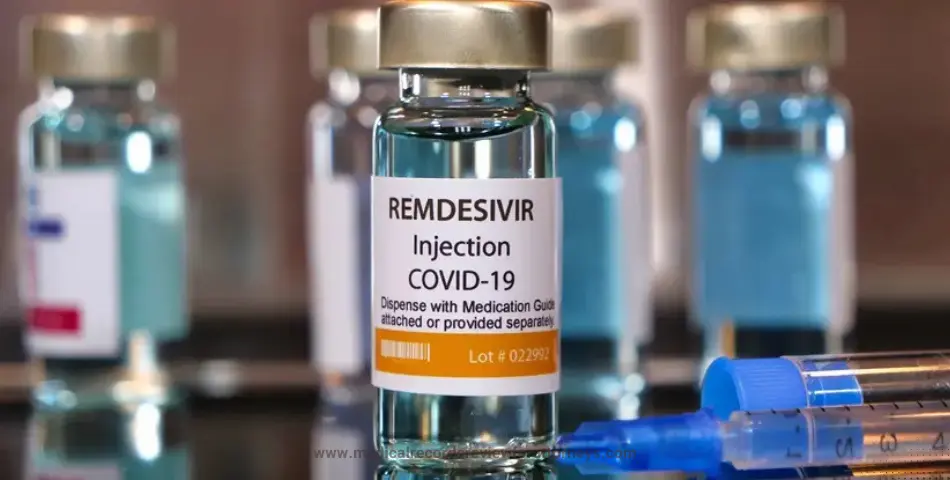
If your law firm is evaluating remdesivir lawsuits whether involving wrongful death, kidney failure, or lack of informed consent the outcome of your case will likely hinge on the strength of your expert medical testimony. Remdesivir (brand name Veklury), the antiviral drug manufactured by Gilead Sciences, was administered widely to hospitalized COVID-19 patients under Emergency Use Authorization (EUA).
As adverse event reports accumulated and litigation expanded, attorneys across the country have faced a central challenge: proving that remdesivir caused a specific injury, and that its use fell below the accepted standard of care.
This guide is written specifically for attorneys and law firms handling Veklury drug injury claims. It covers the legal theories available, what expert medical opinion must establish in remdesivir lawsuits, how courts have evaluated those opinions, and what your team needs to build a credible, defensible case file.
Before You Finalize Your Case Theory
Expert medical opinions are the most contested component of remdesivir lawsuits. Before your law firm finalizes its case theory, it helps to have a qualified physician review the available records and provide a preliminary clinical assessment not a rubber stamp, but a genuine medical-legal analysis that tells you whether causation is defensible.
- Before You Finalize Your Case Theory
- Legal Theories Available in Remdesivir Lawsuits
- The Four Functions of Expert Medical Opinions in Remdesivir Lawsuits
- How Courts Have Evaluated Expert Opinions in Remdesivir Cases?
- Medical Record Review: The Foundation of Every Remdesivir Lawsuit
- Next Steps for Attorneys Evaluating Remdesivir Claims
- Frequently Asked Questions
- Conclusion
What Attorneys Need to Know About Remdesivir Before Filing?
Remdesivir is an intravenous antiviral originally developed to treat Ebola. In 2020, the FDA granted it Emergency Use Authorization for COVID-19 treatment in hospitalized patients. Gilead Sciences later received full FDA approval under the brand name Veklury. From a litigation standpoint, three facts are particularly significant for attorneys evaluating remdesivir lawsuits:
- Kidney toxicity signals: A WHO pharmacovigilance database analysis found remdesivir was disproportionately associated with acute kidney injury compared to other COVID-19 treatments in use at the time, including hydroxychloroquine, tocilizumab, and lopinavir/ritonavir — a signal documented before widespread hospital use.
- Later pharmacovigilance analyses noted this signal weakened over time as more post-market data accumulated – a nuance expert witnesses on either side may raise, and one your medical reviewer should be prepared to address in a case-specific opinion.
- Glass particle contamination recall: Gilead issued a voluntary recall of certain Veklury lots due to particulate matter (glass fragments) found in vials a direct product liability trigger.
- Conflicting efficacy data: A 2023 Cochrane meta-analysis found remdesivir provided modest mortality benefit only in patients on standard supplemental oxygen not in ventilated patients creating a standard-of-care argument when the drug was used beyond its evidence base.
Understanding these three pillars is the starting point for building any remdesivir lawsuits, because your expert medical witness will need to address all of them in their written opinion.
Legal Theories Available in Remdesivir Lawsuits
Attorneys pursuing remdesivir lawsuits have multiple theories of liability to evaluate. Each requires different expert support. Here is a breakdown of the most viable legal pathways:
1. Medical Malpractice / Negligence Against Healthcare Providers
A negligence claim arises when a provider administered remdesivir in a way that deviated from the accepted standard of care. For example, continuing the drug after early signs of renal decline, or prescribing it for a patient population where efficacy evidence was weak.
A documented Nevada case involved a medical malpractice action premised on failure to inform and deviation from treatment standards. The claim was ultimately dismissed due to an insufficient expert affidavit and PREP Act preemption underscoring exactly why the expert opinion must be carefully drafted from the outset.
2. Product Liability Against Gilead Sciences
Product liability claims centre on the glass particle contamination recall and on whether Gilead adequately warned prescribers about known renal risks. However, the Public Readiness and Emergency Preparedness (PREP) Act provides broad immunity to manufacturers of covered countermeasures during a declared public health emergency.
Several courts have held that remdesivir qualifies. This does not foreclose all product liability claims, but it significantly narrows them and demands careful legal analysis before filing.
3. Informed Consent Violations
Several remdesivir class action complaints allege that patients or their families were not adequately informed of the drug’s known risks, particularly nephrotoxicity, before consent was obtained. In one California case, two widows claimed their husbands were administered remdesivir without proper informed consent and subsequently suffered fatal kidney failure.
Expert medical witnesses are essential here to establish what a reasonably prudent physician would have disclosed, and whether that standard was met.
4. Wrongful Death Claims
Wrongful death remdesivir lawsuits generally combine negligence and informed consent theories, with the expert opinion serving the dual function of attributing cause of death to remdesivir administration (versus COVID-19 or comorbidities) and establishing the provider’s breach of duty.
The Four Functions of Expert Medical Opinions in Remdesivir Lawsuits
Expert medical testimony is not a single, monolithic document, it serves four distinct legal functions in remdesivir litigation. Your expert’s written opinion must address each one explicitly.
Function 1: Establishing the Standard of Care
The expert must define what a competent physician, practising in the same specialty and geographic context, would have done under the same clinical circumstances. In remdesivir cases, this involves reviewing hospital treatment protocols in effect at the time of treatment, NIH COVID-19 treatment guidelines, and the published clinical trial data available at the time of administration.’
Function 2: Proving Medical Causation
This is typically the most contested area in remdesivir lawsuits. COVID-19 itself causes acute kidney injury, multiorgan failure, and death the same outcomes alleged to be caused by remdesivir.
The expert must therefore perform a differential diagnosis: reviewing all lab values (creatinine, BUN, eGFR trends), the timeline of remdesivir administration relative to the onset of organ dysfunction, prior renal history, and alternative causation theories. The medical opinion must eliminate competing causes with sufficient specificity to survive a Daubert challenge.
Function 3: Evaluating Informed Consent Adequacy
The expert physician reviews consent documentation, clinical notes, and treatment discussion records to opine whether the patient or family received sufficient information about remdesivir’s known adverse effects. Under EUA conditions, the FDA required that patients be informed of the option to refuse.
An expert can evaluate whether that requirement was fulfilled and whether standard informed consent process was followed for a patient with specific risk factors such as pre-existing kidney disease.
Function 4: Quantifying Damages
Beyond liability, your expert must connect the injury to quantifiable harm. In remdesivir cases, this includes opining on whether the kidney injury was permanent and progressive, whether dialysis was rendered necessary by the drug, what future medical costs will be incurred, and in wrongful death cases, whether death was a foreseeable consequence of the renal insult. This damages analysis is often overlooked in the initial expert engagement but is essential for settlement valuation and trial.
How Courts Have Evaluated Expert Opinions in Remdesivir Cases?
The existing case law on remdesivir lawsuits offers important guidance for attorneys on what expert opinion deficiencies have caused cases to fail. The Nevada case mentioned above is instructive: the court upheld dismissal because the expert affidavit failed to sufficiently establish causation, and the PREP Act barred the state-law claims against both the hospital and manufacturer.
The practical lessons from remdesivir case outcomes are:
- Generic affidavits are fatal: An expert who simply opines that ‘remdesivir can cause kidney injury’ without analysing this patient’s specific records will not survive a Daubert motion. The opinion must be patient-specific.
- PREP Act analysis must precede filing: Before serving a complaint against a manufacturer or hospital, your legal team needs a clear-eyed assessment of whether PREP Act immunity applies and whether any exceptions (willful misconduct) are available.
- Procedural compliance is non-negotiable: Expert reports must comply with applicable state affidavit of merit requirements and federal disclosure rules under FRCP 26(a)(2). Missing a deadline or filing a deficient affidavit can end a viable case.
- Selecting the right specialty matters: In remdesivir kidney injury cases, a nephrologist or critical care intensivist with direct COVID-19 experience carries significantly more weight than a general internist.
Medical Record Review: The Foundation of Every Remdesivir Lawsuit
No expert medical opinion is stronger than the medical record review underlying it. In remdesivir lawsuits, the records that matter most include:
- Admission labs: baseline creatinine, BUN, and eGFR to establish pre-treatment renal function
- Medication administration records (MAR): precise dates, doses, and duration of remdesivir infusions
- Serial lab values: daily kidney function markers showing the temporal relationship between drug administration and injury onset
- Physician progress notes: documentation of whether renal decline was recognised and whether the drug was discontinued
- Consent forms and EUA disclosure documents: evidence of what was or was not communicated to the patient
- Pathology and autopsy reports (in wrongful death cases): tissue-level evidence of organ damage
A professionally organised medical chronology with remdesivir administration cross-referenced against lab trends is the document your expert will rely on most heavily when writing their causation opinion. Disorganised or incomplete records are one of the primary reasons remdesivir expert opinions fail to hold up under cross-examination.
Our Expertise in Supporting Remdesivir Litigation
Medical Records Review for Attorneys (operated by RRR Health Tech LLC) works exclusively with plaintiff and defence law firms on complex medical litigation, including mass tort drug injury cases involving remdesivir, AFFF, Camp Lejeune, and similar matters. Our review team includes:
- Board-certified physicians across relevant specialties (nephrology, critical care, infectious disease)
- Registered nurses with direct ICU and COVID-19 unit experience
- Legal nurse consultants trained in medical-legal record analysis
- Medical chronology specialists with experience in drug injury timelines and pharmacovigilance records
Our deliverables chronologies, narrative summaries, expert opinion support documents, and billing analyses are designed specifically to be usable by your expert witness and defensible in court.
Next Steps for Attorneys Evaluating Remdesivir Claims
If your law firm has received a remdesivir injury or death referral, the evaluation process should follow this sequence:
- Obtain and organise the complete hospital record request all treatment notes, labs, MAR, consent forms, and discharge summary
- Commission a medical chronology that maps remdesivir administration against the clinical course
- Engage an expert medical witness with the appropriate specialty credentials before any filing deadline
- Conduct a PREP Act analysis with your litigation team before naming the manufacturer or hospital as defendants
- Ensure the expert’s written opinion addresses causation, standard of care, informed consent, and damages for all four functions
Frequently Asked Questions
What are the grounds for a remdesivir lawsuit?‘
The primary grounds are:
- Medical negligence if remdesivir was administered outside the standard of care
- Lack of informed consent if the patient or family was not told about known risks such as kidney toxicity
- Product liability related to the glass particle recall and
- Wrongful death if the injury caused or contributed to the patient’s death.
Each theory requires different evidence and a different type of expert medical opinion.
Does the PREP Act block all remdesivir lawsuits against Gilead?
Not necessarily. The PREP Act provides broad immunity for covered countermeasures during a declared public health emergency, and multiple courts have found remdesivir qualifies. However, the Act includes a ‘willful misconduct’ exception. Whether that exception applies requires a detailed factual and legal analysis specific to each case.
What type of medical expert is needed for a remdesivir kidney failure case?
A board-certified nephrologist is typically the strongest choice for cases involving acute kidney injury or renal failure following remdesivir administration. In cases where the patient was critically ill and on a ventilator, a critical care intensivist with COVID-19 ICU experience may carry more weight. Generalist internists are more vulnerable to Daubert challenges in complex pharmacology cases.
What is the statute of limitations for remdesivir lawsuits?
The statute of limitations varies by state and legal theory. Medical malpractice claims range from 1 to 3 years from the date of injury or discovery. Wrongful death statutes are often shorter as little as 1 to 2 years in some jurisdictions. PREP Act-related claims may have separate administrative filing requirements. Attorneys should evaluate limitations periods immediately upon client intake.
Conclusion
Remdesivir lawsuits sit at the intersection of complex pharmacology, evolving federal immunity law, and high-stakes causation disputes. For attorneys handling these cases, the expert medical opinion is not a formality, it is the architecture of your case. A well-supported, patient-specific expert opinion that addresses causation, standard of care, informed consent, and damages is the difference between a case that survives Daubert scrutiny and one that does not.
If your law firm needs organised medical records, a professionally structured medical chronology, or access to qualified expert medical witnesses for a remdesivir case, contact our team today for a confidential case evaluation.
Working on a Remdesivir Case?
In most remdesivir lawsuits, the evidence is already in the medical records, buried across hundreds of pages of lab results, nursing notes, and medication logs. Our medical records review team organises, summarises, and annotates complex medical records into clear, attorney-ready documents.