

For attorneys, having knowledge of the personal injury lawsuit timeline and medical chronology is important if they wish to provide accurate case expectations, have clearer client communications, and maximize the settlement possibilities. Whether the matter involves a car accident, slip and fall, workplace injury, or complicated liability issues, a legal roadmap offers attorneys the means to manage cases effectively and set the expectations of today’s well-informed clients.
For attorneys, explaining each step of the personal injury treatment timeline helps reduce confusion, and builds trust with the client throughout the case. Clients face frequent questions such as:
- Why is my lawyer taking so long to settle my case?
- What are my chances of winning a personal injury lawsuit?
- How long does a lawsuit take to go to court?
By walking clients through the structured steps of the timeline for personal injury lawsuits, attorneys can provide clarity, enhance client satisfaction, and avoid misunderstandings. With more complex matters, such as an auto accident lawsuit timeline, slip and fall lawsuit timeline or medical malpractice file, this clarity is even more significant.
Understanding the Personal Injury Lawsuit Timeline
The timeline for a personal injury lawsuit will differ based on the court/jurisdiction, nature of the injury, the strength of evidence, time spent receiving medical treatment, and backlog in the court system. That said, there is a predictable framework governing many cases.
An attorney must always be mindful of the Personal injury lawsuit statute of limitations because that is a deadline for filing a lawsuit. If the statute of limitations is missed, the client may no longer have a right to seek compensation. This makes it imperative to begin the evaluation process early.
Breakdown of a Personal Injury Lawsuit Timeline for Attorneys
1. Injury Occurrence and Initial Consultation
The timeline for injury lawsuits begins when the injury occurs. At the first meeting, the attorney will evaluate the following:
- Liability
- Damages
- Insurance coverage
- Medical needs
- The client’s expectations
- The likely Personal injury lawsuit payouts range
A client typically asks for examples of personal injury settlements or they may look at a personal injury settlement calculator. An attorney can remind a client that every case is different and each case’s outcome depends on the evidence, medical treatment, and negotiations.
This stage sets the foundation for the entire Personal injury lawsuit timeline.
2. Medical Treatment and Documentation in a Personal Injury Lawsuit Timeline
The Personal Injury Lawsuit Timeline can be significantly influenced by the medical treatment received. If you do not have the necessary documentation, it may be hard to prove damages.
Key tasks include:
- Collecting medical records
- Documenting ongoing treatment
- Obtaining diagnostic imaging
- Tracking medical expenses
Attorneys should counsel their clients to not rush their treatment, because they should only begin to discuss settlement once the injuries have stabilized. Any decision or action that is taken here relates to injuries and injury values, and to the appropriateness of the auto accident settlement timeline or car accident settlement timeline.
3. Investigation and Evidence Gathering
This part of the Personal injury lawsuit timeline is when attorneys will gather all important evidence, including:
- Police reports
- Photographs
- Videos
- Witness statements
- Black-box data (for car accidents)
- Expert evaluations
Having an organized and methodical investigation of the facts contributes more to arguments related to liability (and coverage), and ultimately impacts the chances of success in a personal injury lawsuit.
Depending on the type of case this may occur at the same time as a:
- car accident lawsuit timeline
- auto accident lawsuit timeline
- slip and fall lawsuit timeline
This stage ensures the file is prepared for negotiation or litigation.
4. Demand Letter and Settlement Negotiations in Personal Injury Lawsuits
Once a client’s medical condition has reached maximum improvement, then counsel will draft a demand letter that will generally summarize:
- Injuries
- Medical expenses
- Lost wages
- Pain and suffering
- Comparative negligence
Settlement negotiations begin after insurers review the demand. Clients may repeatedly ask:
- Why is my lawyer taking so long to settle my case?
- How long does a lawsuit take for a car accident?
Negotiation duration varies widely according to adjuster responsiveness, evidence quality, and policy limits. This step can resolve the matter early in the accident lawsuit timeline, avoiding the need for litigation.
5. Filing the Lawsuit if Necessary
When a case cannot be negotiated, attorneys will move forward with litigation. With the filing of a lawsuit, the Personal injury lawsuit timeline formally begins based on the court process.
Key steps include:
- Drafting the complaint
- Serving the defendant
- Awaiting the defendant’s response
Many clients worry at this point and ask: How long does a lawsuit take to go to court?
Court schedules, defendant delays, and legal complexities all influence timing.
6. Discovery Phase in a Personal Injury Lawsuit Timeline
Discovery, which is typically the longest part of the Personal injury lawsuit timeline, is where both sides will exchange critical information that is pertinent to the case.
Discovery includes:
- Interrogatories
- Requests for production
- Depositions
- Expert witness disclosures
- Independent medical examinations
This phase is essential for strengthening the case and identifying weaknesses early.
7. Alternative Dispute Resolution (ADR) Methods Overview
Alternative dispute resolution (ADR) outs, such as mediation or arbitration, in many cases can help resolve a case more quickly than a trial. Mediations may be faster in terms of:
- Faster resolutions
- Less cost
- Improved client satisfaction
If successful, ADR shortens the overall personal injury claim timeline and allows clients to receive compensation faster.
8. Trial Preparation Essentials & Trial Proceedings Overview
If ADR fails, attorneys must prepare for trial. Preparation includes:
- Developing case strategy
- Preparing exhibits
- Training clients for testimony
- Cross-examining expert witnesses
During trial, the case proceeds through:
- Opening statements
- Witness examinations
- Expert testimony
- Closing arguments
This phase can significantly extend the Personal injury lawsuit timeline, especially in jurisdictions with congested dockets.
9. Verdict Delivery Process & Post-Trial Motions Brief Explanation
After a trial is finished, a judge or a jury makes a verdict. In the event that the verdict is against the case, the attorneys can file motions after trial to:
- Amend the judgment
- Request a new trial
- Challenge evidence decisions
This stage is crucial for preserving the client’s rights.
10. Judgment Collection Process & Settlement Implementation Brief Explanation
A verdict in your favor is only a part of it. The attorneys must also make sure that the client is fully compensated for their injuries. This process can include:
Steps include:
- Collecting funds from insurers
- Finalizing settlement documents
- Distributing client funds
- Paying liens
This concludes the timeline for personal injury lawsuits, though large settlements may take longer to process.
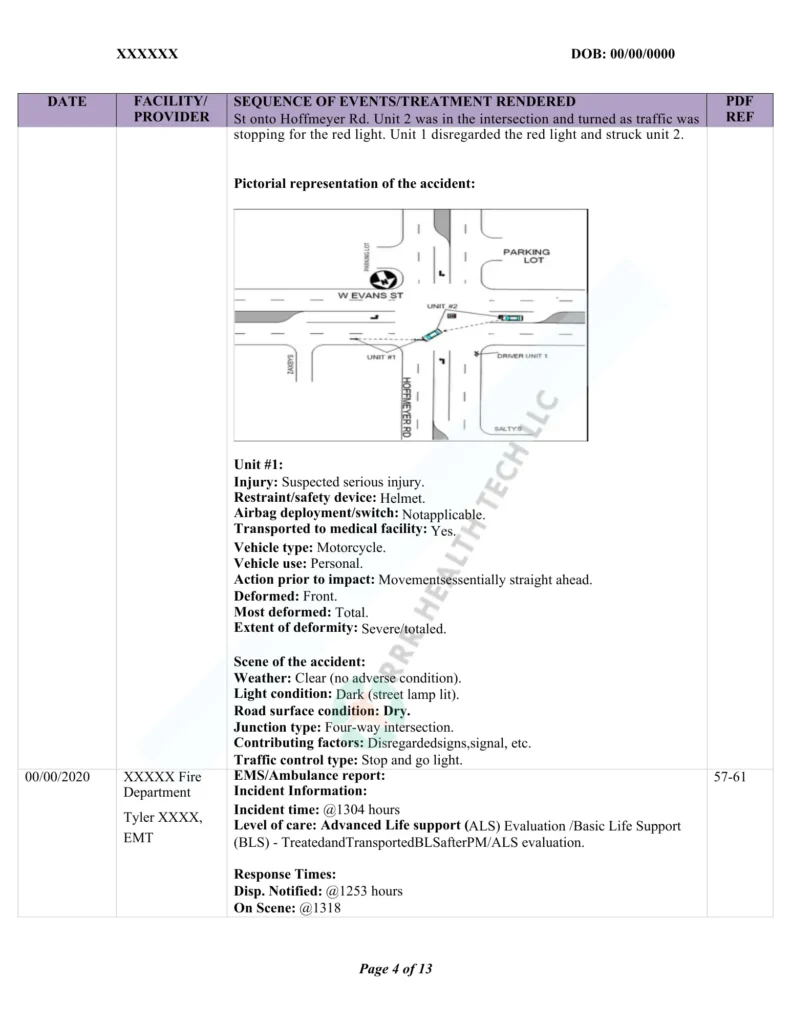
Sample Medical Chronology for a Personal Injury Lawsuit Timeline

FAQs
What is a personal injury lawsuit timeline?
A personal injury lawsuit timeline is a step-by-step legal and medical sequence that shows how a personal injury case progresses from the date of injury and medical treatment to settlement or trial resolution.
For attorneys, a personal injury lawsuit timeline helps:
- Present facts logically during settlement talks or trial
- Identify delays or gaps in treatment
- Track case progress clearly
This timeline often integrates a personal injury treatment timeline and supporting medical records to ensure accuracy and legal strength.
How long does it usually take to settle a personal injury lawsuit?
Most cases are completed and settled in a period of six months to 18 months, depending on how long medical treatment continues, negotiations between the parties are conducted, and the delays of the court.
What are the chances of winning a personal injury lawsuit?
Success will depend on whether there is sufficient evidence, medical proof that will support a case going forward, and liability. Oftentimes, when there is good preparation, many claims are settled successfully.
How does a medical chronology support a personal injury lawsuit timeline?
A medical chronology is the foundation of an accurate personal injury lawsuit timeline. It organizes medical records in chronological order and connects medical events directly to the legal timeline of the case.
A medical chronology supports a personal injury lawsuit timeline by:
- Establishing a clear injury-to-treatment timeline
- Linking medical care directly to the accident or incident
- Highlighting treatment gaps, causation, and recovery progression
- Supporting demand letters, settlement negotiations, and trial preparation
Using medical chronology samples or examples, attorneys can quickly understand the personal injury treatment timeline, strengthen liability arguments, and present medical evidence clearly to insurers, mediators, and courts.
Conclusion
If there are clear expectations of what will happen throughout the personal injury lawsuit timeline. This will not only be beneficial for the attorney in providing the case, but for managing the expectations of your client and a timely resolution. You should recognize or service a client from the consultation to collecting judgment. If you follow the established personal injury lawsuit timeline, you can effectively navigate the complexities of that timeline, mitigate delays, and give your client the best result.
Need Expert Legal Support Services?
If your law firm needs medical records review, summaries, chronologies, billing review, or litigation support for trial preparation, our expert team is here to assist.
Reach out us today to streamline your workflow and power your personal injury cases with accuracy and speed!