Introduction
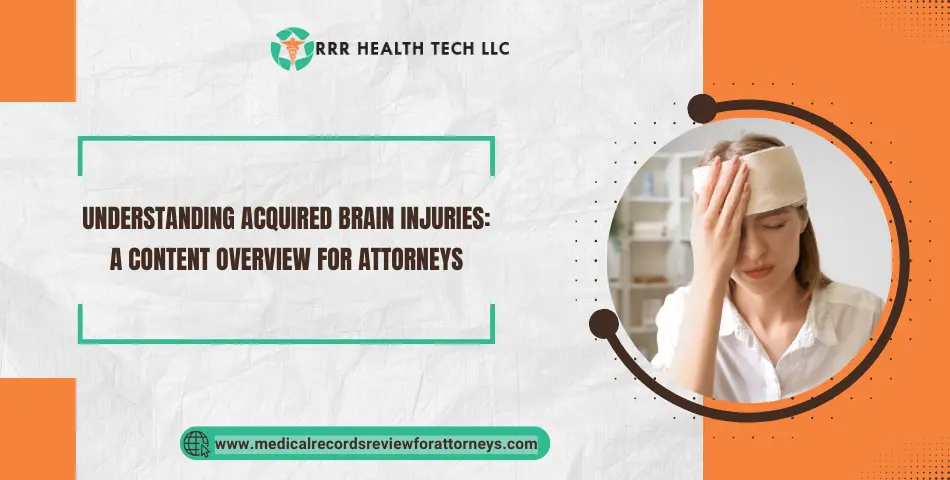
Acquired brain injuries result from a diverse range of accidents, medical ailments and injuries, or environmental accidents. Having a clear understanding of acquired brain injuries (ABIs) is of utmost importance for attorneys representing clients with these challenges. Here, we explore ABIs, with a focus on medical histories, in a bid to illustrate why they deserve special attention in legal advocacy.
What is an Acquired Brain Injury?
Acquired Brain Injuries are injuries stemming from a range of events, both traumatic and intentional, sustained after one is born. They also include injuries sustained in accidents and explosions. In contrast with congenital brain injuries, ABIs are unlike brain injuries sustained from birth—they manifest at any point in a person’s life.
Key Characteristics of Acquired Brain Injuries
• Happen at any time: ABIs may be sustained from accidents, medical procedures or events.
• Different tiers of severity: Brain injuries may be incurred at different levels of severity, from light concussions to severe brain damage, and even death in the worse cases.
• Higher chance of recovery: Though recovery from ABIs is possible, the degree of recovery is determined mainly by the severity of the injury, the timing of surgeries and medical intervention performed.
Traumatic Brain Injury (TBI)
• Overview: Trauma from outside the body, for example, a blow to the head or a penetrating head injury, wounds and injuries, illness or injury TBIs.
• Overview: Injuries from falls, vehicular accidents and sporting activities TBIs are the most common to occur.
• Overview: Wounds or injuries of the head may result in headaches, confusen, an abnormal gain or weight, and a change in mood.
Non-Traumatic Brain Injury
• Overview: Strokes, infections, and lack of oxygen are examples of internal and non-external factors.
• Overview: Medical conditions such as haemorrhagic and ischemic non-traumatic brain injuries and their symptoms include aneurysm, tumour on infections TBIs.
Statistics and Current Data (2024)
• Numerical data: Based upon and relied upon the CDC, in an effort to understand the prevalence of the chronic injuries it’s being said that the approximate numbers of around and estimated of 2,8M TBIs are being accumulated on a yearly basis across in the country.
• Numerical data: As of the year 2023, It was noted that around and estimate that more than 280k people were being hospitalized because of TBIs.
• Information’s: Based upon the stats, if people are being diagnosed with acquired brain injuries, it’s believed that 1 out of 5 people are diagnosed and in the following time period most people are diagnosed with chronic and permanent conditions.
Common Causes of Acquired Brain Injuries
• Motor Vehicle Collisions: Involving accidents and rollovers, these are among the top causes of TBIs.
• Falls: A significant concern for the elderly, falls can result in serious brain injuries.
• Sports Injuries: Brain injuries, including concussions, are prevalent in contact sports.
• Non-Traumatic Injuries: Strokes and infections are examples of medical issues that can lead to brain injuries.
Legal Implications for Attorneys
• Insurance Issues: Claim protocols may differ between states, making it difficult to navigate based on federal and state laws.
• Determining Liability: Liability can be determined on multiple levels, for example, drivers, and property or medical professionals.
• Determining Liability: Liability can be determined on multiple levels, for example, drivers, and property or medical professionals.
The Importance of Reviewing Medical Files in ABI Cases
• The Importance of Medical Files: Medical records are central in the documenting the injuries, and the impact of the injuries on the victim’s life.
How We Help Attorneys:
• Zealous Representation: We specialize in reviewing medical records and pulling the relevant details needed.• Expert Analysis: We analyze medical information for attorneys to interpret how the injuries may impact the client’s life in the future.
Case Studies
Case Study 1: Overview and Challenges
• Overview: The case concerns a 35-year-old male motorcycle accident victim with a TBI. The motorcycle accident was caused by a negligent motorist.
• Challenges: Perhaps the most difficult problem in this case was how to prove the injury’s impact on the client’s life over time.
• Solutions: Our detailed review of the medical records revealed several qualifiers that demonstrated the TBIs severity and how it affected the patient’s functioning level.
Frequently Asked Questions
• What are the long-term effects of an acquired brain injury?
• Cognitive functions, emotional response, and movement abilities may all be affected in the long-term.
• How can attorneys prove liability in ABI cases?
• Medical documents, accident documents, and testimony from experts can all be used to prove liability.
Conclusion
The challenges of acquired brain injuries affect not only the individual, but also their family members and loved ones. Attorneys who offer effective advocacy for their clients and help them obtain the compensation they deserve by understanding the intricacies of such injuries and reviewing medical records are truly noteworthy.