Introduction
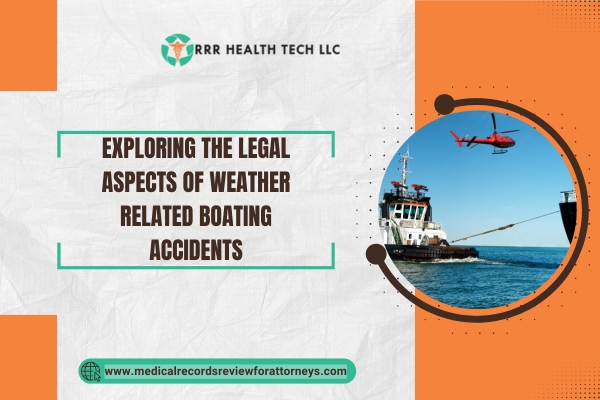
Both commercial and recreational vessels face grave dangers due to weather-related boating accidents. For lawyers assisting victims of such incidents, understanding the relevant legal factors is very important. This article explains how weather impacts liability, obligations of a boat operator, the value of medical record review services, and how these services aid in providing strong case builds for clients.
Legal Concepts Related to Boating Accidents
Overview of Maritime Law
• Definition: Maritime law encompasses activities on navigable waters, and include boating accidents.
• Key Legislation: Other maritime laws like The Jones Act govern the entitlement and obligations of Boating Accidents injured persons and boat operators.
Liability in Boating Accidents
• Negligence: The operators of the vessel are expected to take reasonable steps necessary for securing the safety of passengers.
• Weather Consideration: Operators are required to evaluate the weather and take steps to avert accidents.
Effects of Weather on Boating Safety
Common Weather-Related Risks
• Severe Storms: Colossal winds and rain can result in collisions and capsizing.
• Fog: It increases the chances of Boating Accidents by reducing visibility.
• Rough Water: Large waves can destabilize vessels posing dangers to all boaters.
Operator Responsibilities
• Pre-Trip Assessments: Operators must review weather conditions, and take civil authority notifications into account.
• Maintenance of Vessels: Undergoing regular checks to ensure boats remain in excellent condition is obligatory
The Importance of Medical Record Examination
Pattern Recognition: A medical record review aids in identifying patterns that can be leveraged to make better decisions and improve patients’ care.
Improving Safety and Quality: They find gaps that have been overlooked and enable quality improvement projects aimed towards patient safety and harm reduction.
Legal Purposes: In the context of law, medical record examinations are needed to assess the credibility of a medical malpractice case to provide lawyers with essential information regarding the case.
Closure: For relatives of the patients who passed away, these reviews can provide answers and closure on how a loved one died.
Elements of a Medical Record Examination
Document Gathering: Entails the collection of all applicable medical records which incorporates a facility’s records, memos, and other documentation by their healthcare professionals.
Diagnostic Report Preparation: Forensic consultants examine the collected documents to detect discrepancies, mistakes, and deviations from the standard of care provided.
Creation of Medical Event Tracers: Recording the date and sequence when care was provided, treated or where critical turning points which lead to negative outcomes helps to understand the situation.
Causation Evaluation: Determining if there are medical blunders or negligence that contributed to a patient’s death or an injury sustained.
Results of Medical Record Examination
Specialist Testimony: Forensic pathologists submit commentary based on the review which can be used for legal purposes.
Determining Case Merit: A review may assist in determining whether a potential claim is worth pursuing, thereby saving time and resources that would have been spent before litigating.
Mitigating Factors: Recognizing aspects that might reduce the blame assigned to some of the healthcare providers, for example, non-compliance of the patient or pre-existing medical conditions.
Alternative Causation Analysis: In certain instances, reviews may uncover other causes of death that differ from the initial impressions held by the healthcare providers.
Case Studies
Case Study 1: Recreational Boating Accidents
• Overview: What was supposed to be a joyous family trip was later filled with tragedy when a tempest appeared out of nowhere, flipping their boat.
• Challenges: Proving negligence without the operator checking the weather was a tall order.
• Solutions: Reviewing the medical files showed some of the patients had conditions that impeded full recovery.
Case Study 2: Commercial Fishing Incident
• Overview: A commercial fishing boat capsized during a storm and a few other mitigating factors caused numerous Boating Accidents injuries aboard.
• Challenges: Determining whether the captain was ignoring weather-related notifications and acting out of reckless abandon on the sea.
• Solutions: Analysis of the circumstantial information showed how intricate the Boating Accidents injury claimed to the medical bill needed.
The Role of Medical Record Review Services
Important for Lawyers
• Case Preparation: An extensive surgical history narrative helps lawyers appreciate the gravity of the injury by deep understanding the full scale of damages incurred.
• Evidence Collection: Medical documents are often the cornerstone within supportive documents proving negligence and responsibility was demonstrated in detrimental ways.
How We Help Lawyers
• Comprehensive Reporting: We prepare comprehensive and easily readable contracts outlining the patient’s history, treatments done, and their expected outcomes.
• Legal Counselling: Legally informed about the anatomy of trauma incurred in boat accidents and strengthen case with videos capturing the crimes.
Conclusion
Attorneys who represent the victims need to understand the law when it comes to integrating various factors like weather into a boating accidents case. With proper advocacy, legal practitioners who utilize the services offered by medical record reviewers stand to gain robust case advocacy. Reach out to us today for additional guidance on how we can support you.