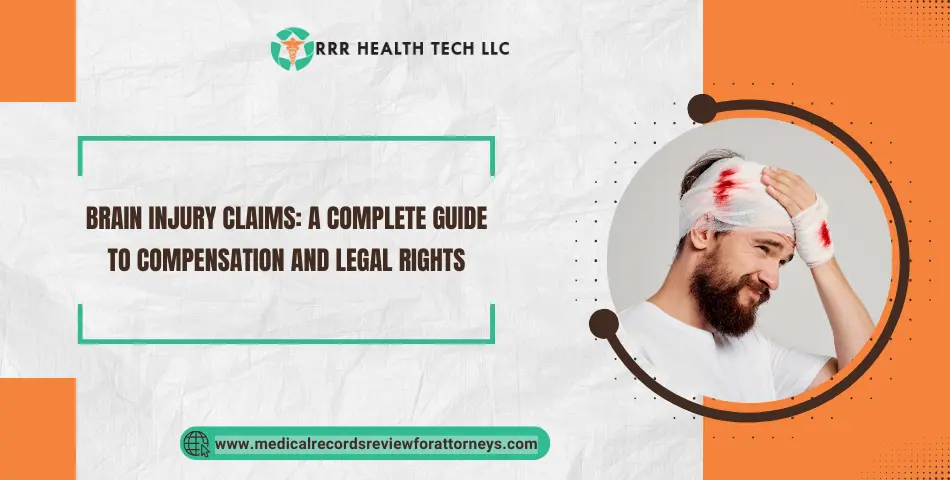
Accidents, medical wrongdoing, or even injuries on the job, head injuries and their ramifications are the central focus of Personal Injury Law. The repercussions of a head injury are multifold and not only physical, but emotional and mental as well. Thus, legal advice is of paramount importance to ensure one is compensated properly. It is crucial for lawyers, and their firms, to appreciate the nuances of brain injury claims and claims, intricate legalities involved, and the consequences of such for the victims to help render justice, and aid.
The Understanding of Legally Blinded Claims
Sustaining a Traumatic Brain Injury (TBI) as a result of negligence on the part of another party is the basis of a brain injury claims. A concussion is the least severe form of a head injury a person can sustain, whereas an injury that completely freezes one’s ability to reason and move is the most intense. It is common for specialists in the legal field to utilize a brain injury settlement calculator for such injuries to assist in their claim.
When a worker suffers from an injury as a result of their work, they are not excluded from obtaining head injury worker’s compensation. Moreover, the settlement value allocated for post-concussion syndrome in the workforce is often quite relevant, particularly when such symptoms greatly hinder the ability to work for a prolonged duration.
The Types of Brain Injuries Covered in Claims
Different kinds of brain injuries can be claimed in a court of law. Different injuries have different legal contexts to be worked on.
Mild Traumatic Brain Injury (mTBI)
• Usually happens when a person falls, gets into a car accident or gets injured during a sporting activity.
• May presents symptoms like headaches, dizziness, amnesia, and exhaustion.
• Brain Injury settlements of this sort are arrived at by calculating medical expenses and therapy needed.
Moderate to Severe Traumatic Brain Injury
• Results in significant cognitive as well as physical shortcomings.
• Such injuries have an increase in long-term medical care as well as rehabilitation.
• Average settlements for traumatic brain injuries have settlements that are higher due to the lasting consequences.
Other mTBI settlements such as ‘losing a pulse brain injury settlements California’ along with mTBI settlements ‘California’ and some other places are used by legal professionals to find the appropriate compensation amounts.
Factors Affecting Brain Injury Settlements
There are various reasons for the amount placed on brain injury claims such as:
• Medical conditions that come with the injury along with the severity of the injury.
• Money lost in the working field and money that can be earned in the future.
• Rehabilitation along with therapy.
• Decreased standard of life and the impact on life.
• Confirmation of negligence and liability.
Brain injury verdicts and settlements are used by many lawyers as a compass in aiming for appropriate compensation. What the lawyers are aiming for is complete financial protection for their clients and their future expenses to come.
Filing a Brain Injury Claims: The Legal Journey
In any legal practice, a brain injury claim involves:
Meeting for the First Time – A discussion between the attorney and a potential new client focusing on details relevant to the case and which a lawyer needs to take on. In this case, personal injury lawyer focusing on brain injuries would help the best.
Administrative Evaluation – Collating the injury’s medical and personnel records to show how badly the injury has been sustained.
Demand and Negotiation – Making requests and filling the forms in the brain injury settlement calculators as to what the expected claim amount is to the insurance companies or other responsible entities.
Claim Filing: A Claim or Lawsuit – If a dependent’s insurance will not agree to the claim, then defending the claim in the court will be necessary.
Closing – After settlement or court’s decision has been made.
A comprehensive legal strategy timely protects clients from partners in the sector interested in repeating the medical records. The right advocate emphasizes what witnesses need to convey regarding the legal injury to make sure the right recipient gets the compensation.
Compensation Overview for Brain Injury Claims
Brain injury victims typically seek multiple forms of compensation:
• Medical expenses including injury treatments at the hospital, rehabilitation, therapy, and other medical care
• Lost Wages – Payments necessary to compensate for absent work and funds needed for future earnings
• Pain and suffering – Accounts for the injury’s mental and physical toll on the victim
• Other specialized Care – Indefinite medical care that long terms of care for severe injuries.
The use of brain injury settlement calculators and analyses that determine equitable settlement offers for TBI cases helps lawyers to derive accurate settlement amounts.
Conclusion
Defending the rights of victims suffering from traumatic brain injuries is vital, and constructing complex lawsuits that victims can benefit from is equally as vital. These types of lawsuits are known as brain injury claims. Complex legal issues like settlements, claim values, personal injuries, legal document preparation and legal representation require the attention of professional legal practitioners. Brain Injury attorneys and legal firms ensure that their clients gain the needed expenses coverage for the medical attention, wage loss and expenses for long-term care.
Brain injury claims are sensitive and delicate issues that need to be handled with care. Questions and answers involve this claim form and need to be clarified with the legal representative themselves.
FAQ
Who is entitled to file a claim for a brain injury?
Any person that sustains an injury to the brain because of someone’s negligence, a work-related injury or due to malpractice has the right to file a claim. All that is needed is the evaluation of an experienced claim attorney regarding your situation and belief.
A brain injury claim could have what different types of compensation?
The types of compensation that could be offered are: medical expenses; lost income; pain and suffering; rehabilitation costs; and long-term care. In extreme cases, an individual may be entitled to additional damages for care that needs to be provided for the rest of their life.
How long do I have to make a claim for a brain injury and what is the legal window for that?
In this instance, an individual does have a legal window to make the claim. In order to establish the window, a legal expert will need to be consulted. There are certain legal deadlines that need to be adhered to and for the individual to have the opportunity and best chances to receive compensation, it is best to consult them as early as possible.
There is no reason that, should you or a family member have experienced a brain injury as a result of someone else’s negligence, you shouldn’t reach out to us. We will ensure that the entire claims process is as simple as possible and will do everything to attain the compensation that you are entitled to.