Despite the many claims, advertising campaigns and statements regarding the safety and the enhancement to one’s life by Cosmetic Procedures, every year thousands of patients experience catastrophic injury due to negligence or poor surgical decision-making and inadequate aftercare. Cosmetic Surgery Malpractice occurs when a surgeon or other medical provider acts below the accepted standard of care and inflicts physical, emotional, and/or financial harm on a patient.
To effectively represent plaintiffs in the most sensitive and complicated Cosmetic Surgery Malpractice cases, attorneys must obtain comprehensive records of the patient’s medical history, expert opinion reports, and an organised chronological account of all medical events regarding the patient to build a compelling argument and establish liability.
With the growing number of elective procedures such as liposuction, rhinoplasty, breast augmentation, Botox injections, facelift operations and gender-affirming surgeries, the sheer volume of Cosmetic Surgery Malpractice lawsuits being filed is also on the rise.
For attorneys and medical malpractice law firms as well as teams of lawyers dealing with Cosmetic Surgery Malpractice lawsuits, it is critical to have an understanding of the types of injuries their clients suffer, the causes of those injuries, and the legal strategies necessary to obtain appropriate compensation for their clients.
Understanding Cosmetic Surgery Malpractice
Cosmetic Surgery Malpractice involves much more than a patient being unhappy with how they look, it also encompasses surgical negligence, preventable mistakes, failure to provide informed consent, and deviation from the standard of care. Whether the attorney represents the case as a cosmetic injury attorney, a cosmetic surgery attorney, a plastic surgery attorney, or a Cosmetic Surgery Malpractice Attorney, all cases of Cosmetic Surgery Malpractice require the expertise of an experienced medical professional providing medical analysis, expert testimony, and demonstrable evidence of harm suffered by the plaintiff.
Common reasons patients pursue cosmetic negligence claims include:
- Miscommunication about risks and expectations
- Improper surgical technique
- Use of contaminated tools or unsafe facilities
- Unqualified or inexperienced surgical staff
- Failure to monitor patient during anesthesia or postoperative recovery
- Lack of informed consent
Common Types of Injuries in Cosmetic Surgery Malpractice Lawsuits
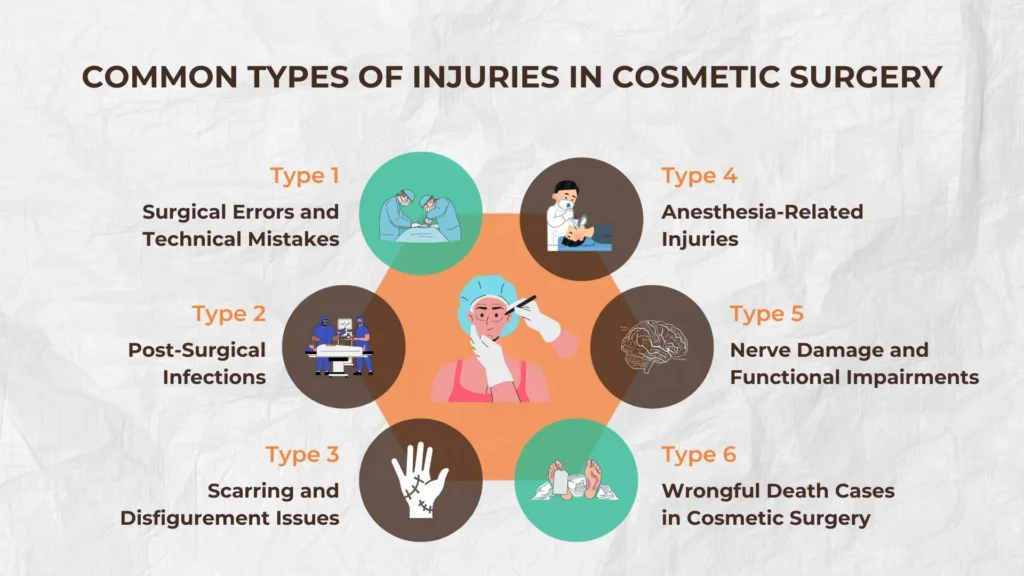
1. Surgical Errors and Technical Mistakes
Among the many reasons why a cosmetic surgery malpractice claim is brought about, a surgical mistake is the leading reason. When mistakes are made during the course of a surgical procedure it can result in asymmetry, damage to tissue, implant being placed in the wrong area, too much fat being taken away from the patient, and structural deformities in the patient’s body. These errors can occur due to a surgeon’s lack of experience, fatigue, miscommunication with other members of the surgical team, or simply making careless mistakes while operating.
In order for attorneys to evaluate a case involving this type of medical malpractice, they need to review ALL of the details of the patient’s medical records to determine if the surgeon did not perform the procedure in accordance with the accepted standard of care. Typically, it will take several items (operative reports, before-and-after images showing comparisons, and an opinion from an expert medical witness) to develop a strong case for proving negligence against the physician.
2. Anesthesia-Related Injuries
Anesthesia errors can cause serious injury (brain damage, breathing problems, heart failure) or even death to the patient. Cases of anesthesia negligence are often found in cases involving liposuction, tummy tucks, and procedures for gender reassignment surgery, as performed by Stiller Aesthetics in Spokane, for example Dr. Stiller’s top surgery results case.
Common anesthesia-related injuries include:
- Overdose of anesthetic medication
- Failure to monitor oxygen saturation
- Allergic reactions not accounted for
- Intubation injury
3. Post-Surgical Infections
Postoperative infections are also a critical area of concern for attorneys working on cosmetic surgery cases. Frequently, infections arise due to unsanitary conditions in the operating room, use of contaminated instruments/surgical tools, inadequate care for the wound, and/or inadequate follow-up after surgery. Serious complications caused by postoperative infections can result in sepsis and necrosis, as well as a lifetime of disfigurement.
| Type of Infection | Cause | Impact on Cosmetic Surgery Malpractice Claim |
| Cellulitis | Bacterial contamination | Evidence of negligence and facility hygiene issues |
| Sepsis | Failure to monitor | Increases settlement value |
| Tissue necrosis | Poor blood supply or equipment misuse | Significant factor in Cosmetic Surgery Malpractice |
4. Nerve Damage and Functional Impairments
Improper surgical technique can damage nerve clusters responsible for sensation or movement. This is frequent in procedures such as facelifts, liposuction near nerve pathways, and breast augmentation. Resulting injuries may include chronic pain, paralysis, numbness, or impaired mobility, critical evidence in Cosmetic Surgery Malpractice litigation.
5. Scarring and Disfigurement Issues
Scarring and deformity can often lead to litigation when a patient’s aesthetic result is significantly different from what was promised. A plaintiff may ask a question like the following, “Can I take my surgeon to court for a negative result?” Yes, legally they can if they can prove that the negative outcome was caused by the surgeon’s negligence. To prove negligence, lawyers will work with medical malpractice attorneys and experts to show that the surgeon has breached the standard of care.
6. Wrongful Death Cases in Cosmetic Surgery Malpractice Claims
A wrongful death lawsuit involving Cosmetic Surgery Malpractice is very complex and difficult to pursue because they often arise as a result of complications related to anaesthesia or heart-related issues, infections, or procedures being performed by unqualified providers. A wrongful death lawsuit in this scenario would require an extensive investigation of the ICU records, laboratory reports, surgical notes and the use of expert witnesses.
Families also frequently ask “How much can you sue for a botched surgery?”
The value depends on:
- Extent of injury or death
- Economic losses (employment, treatment, future care)
- Pain and suffering
- Punitive damages when reckless conduct is proven
Legal Aspects and Compensation in Cosmetic Surgery Malpractice Cases
To prove Cosmetic Surgery Malpractice, attorneys must show:
- A duty was owed to the patient
- The standard of care was breached
- The breach directly caused injury
- Damages resulted
Compensation in Plastic surgery malpractice settlements may include:
- Medical expenses and corrective surgeries
- Lost wages and disability compensation
- Emotional distress and suffering
- Loss of enjoyment of life
- Funeral and wrongful death claims
Successful litigation often requires a combination of medical chronologies, medical opinion reports, expert testimony, and well-organized evidence prepared by medico-legal professionals.
Conclusion
Within the context of today’s legal profession, these volume and complexity of Cosmetic Surgery Malpractice suits are increasing. Therefore, as these cases become more complex and require additional evidence from medical files, opinions from expert witnesses, and successful strategies developed by attorneys, attorneys rely on accurate reviews of medical records in order to establish causation, damages, and liability for Cosmetic Surgery Malpractice cases. By collaborating with medical legal experts, Cosmetic Surgery lawyers can develop strong negotiating strategies and increase their probability of reaching a successful result in a Cosmetic Surgery Malpractice Case.
Frequently Asked Questions
What insurance providers cover cosmetic surgery malpractice claims?
Cosmetic Surgery Malpractice is covered by many professional liability insurance providers; however, a specialty policy may be required for elective procedures and coverage can differ from state to state as well as from procedure type to procedure type.
Can I get a free case evaluation for cosmetic surgery malpractice?
Yes, many providers offer complimentary consultations to go through the medical records of an individual to help identify what potential liability may exist and what legal remedies may be available.
What are the common causes of cosmetic surgery malpractice claims?
Surgical errors, mistakes in anesthesia, post-operative infections, a lack of informed consent, and poor follow up care are the most common types of cosmetic surgery malpractice cases.
Enhance your litigation success with expert Medical Chronology Services. We support attorneys handling Cosmetic Surgery Malpractice and other medico-legal cases with accurate, objective, and timeline-driven medical evidence review.
Contact us today for medical records review & chronology services designed for attorneys! For Free Trails