Introduction
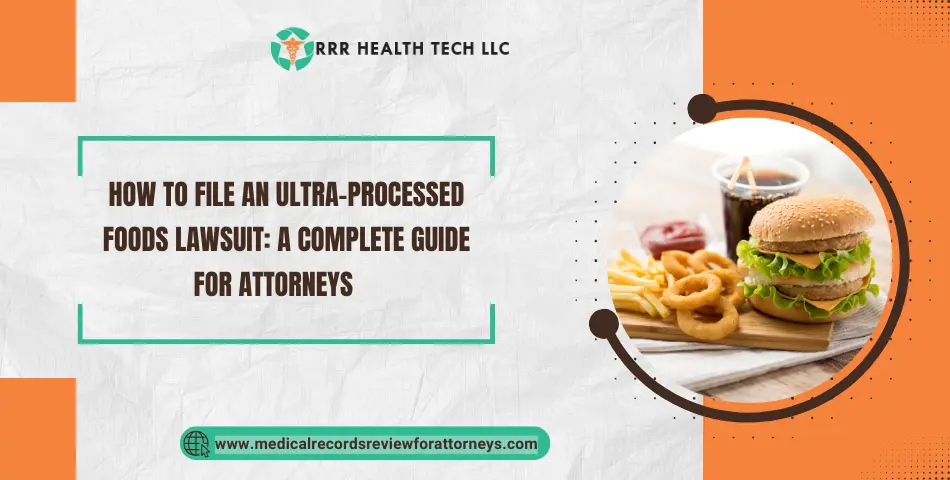
The health impacts of the modern diet have become a serious issue, resulting in an escalation of litigation targeted at the manufacturers and suppliers of ultra-processed food. This category of food consumption is further associated with obesity, diabetes, and a host of other diseases which drives people to initiate legal action. This article outlines the steps for filing an ultra-processed foods lawsuit, paying particular attention to the importance of the medical record review services that assist lawyers at every stage of the workflow.
Understanding Ultra-Processed Foods
Definition and Characteristics
• Definition: Ultra-processed foods are these ones which are derived wholly or primarily from food substances, and are industrially processed in such a way that foodstuffs are created from them.
• Common Examples: Sugar-laden beverages, packaged food items, instant noodles, and ready-to-eat meals.
Health Implications
• Obesity: There is ample evidence linking the consumption of ultra-processed foods to rising obesity rates.
• Chronic Diseases: Increased propensity to diabetes, heart ailments, and other degenerative diseases.
The Legal Landscape of Ultra-Processed Foods
Overview of Foods Lawsuit
• Rising Trend: A lot of lawsuits are coming up against food producers for deceptive marketing and health promotion.
• Key Issues: Illustrative Foods Lawsuit have underscored the part of manufacturers in public health disasters.
Legal Bases for Opening a Foods Lawsuit
• Negligence: Not adequately warning consumers or providing safe products.
• Fraud: Marketing claims concerning health benefits were false advertisements.
• Product Liability: The responsibility of the manufacturers to the destructive effects of their products on consumers.
How to File an Ultra-Processed Foods Lawsuit
Detailed Instructions
- Look for Legal Advice: Speak to lawyers who work with food mass torts or specialize in consumer food class action lawsuits.
- Collecting Information: Compile documents such as medical files, dietary records, and any other documents that establish a connection between health issues and ultra-processed food intake.
- Submitting the Complaint: Complete and submit a complaint to the relevant court stating complaints against the producer.
- The Discovery Stage: Get into the discovery stage to gather additional evidence and obtain statements from the relevant persons.
- Settlement Discussions: Discuss the possibility of settlements before going to court.
Role of Medical Record Review Services
• Relevance: medical records play a very important part in the establishing of a relationship between the consumption of food classified as ultra-processed and certain health issues.
• Procedure: Medical record review services assist lawyers by:
• Building complete medical files.
• Examining records for relevant conditions.
• Advising in the front of court, giving pertinent information to the issue at hand.
Current Trends and Figures (2024)
• Eating Ultra Processed Foods: Exceeds 60% of the average American diet.
• Health Statistics: Recent research has shown an increase of up to 30% in the prevalence of obesity in children due to the consumption of ultra-processed foods.
Case Studies
Case Study 1: The Johnson Family Vs. Food Manufacturer
- Overview: After a child suffered serious obesity-related health concerns, the parents litigated against one of the foremost food producers in the country.
- Challenges: Fulfilling the requirements of the medical narrative synthesis needed in order to validate the child’s health problems as a direct consequence of consuming convenience foods.
- Solutions: A detailed study of medical records verified the existence of chronic ailments associated with the consumption of ultra-processed foods.
Case Study 2: Maria Gonzalez Vs. Snack Food Company
- Overview: After years of binge eating a franchise marketed ‘ultra-processed’ snacks, Maria Gonzalez was diagnosed with diabetes type 2.
- Challenges: Lack of primary medical records hampered the link causation chain construction.
- Solutions: She provided adequate documentation of her medical file alongside an adequate witness for her trial.
Conclusion
Legal action against companies producing ultra-processed foods demands meticulous strategy and comprehensive documentation to ensure success. Providing attorneys with organized medical record review services helps streamline the process by collecting and verifying injuries to ensure justice is served to the victims. The reality of these foods and the health-related consequences continues to broaden, creating a demand for legal action concerning these products.