Introduction
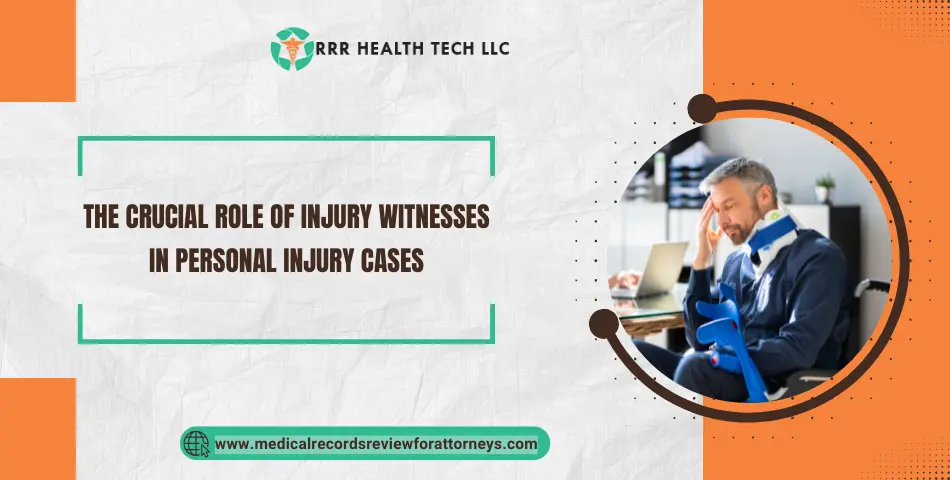
In personal injury lawsuits, third-party witnesses often tip the scales toward fair, timely resolutions. Their neutral accounts fill gaps, outline who acted carelessly, and breathe credibility into a client’s story. This article explains why eyewitnesses matter, how to gather their statements, and the role of medical record reviews in turning rough notes into a polished case.
Understanding the Importance of Injury Witnesses
What Are Injury Witnesses?
- Definition: An injury witness is any person present during an event who saw what happened and is willing to explain it.
- Types of Witnesses: Eyewitnesses can be pedestrians, passengers, first responders, or even technical experts who assess fault later.
Why Injury Witnesses Matter
- Clarifying Events: Neutral observers offer clear, impartial facts that cut through competing claims and spotlight the true sequence of events.
- Strengthening a claim: A reliable witness’s account can back up the injured party’s story, making it much easier to prove who was at fault and secure fair compensation
The Process of Gathering Witness Statements
Steps to Collect Witness Information
- Immediate Documentation: Gather basic details while memories are fresh, preferably at the accident scene or in the moment’s right after.
- Contact Details: Note each person’s name, phone number, and an email if they offer it.
- Written Statements: Politely ask them to jot down what they saw or record a short voice memo on a smartphone.
- Engaging with Witnesses: Approach each person respectfully, explain why their testimony matters, and thank them for taking the time.
- Ask Open-Ended Questions: Questions that invite fuller answers help paint a complete picture of the incident.
- Follow-Up: Keep the lines open in case witnesses need to clarify something later or appear in court.
Challenges in Gathering injury Witnesses Statements
- Witness Availability: Some people move on quickly, change numbers, or become hard to reach once the initial excitement dies down.
- Reluctance to Testify: A busy schedule, fear of backlash, or simply not wanting to enter the legal fray can keep a witness from stepping forward.
The Role of Medical Record Review Services
How Medical Record Review Services Support Attorneys
- Comprehensive Analysis: Medical-review experts sift through charts, bills, and imaging reports, translating dense medical jargon into clear findings that strengthen settlement demands and courtroom arguments.
- Attorneys who pair solid medical findings with witness accounts create stronger, harder-to-sway cases.
Benefits of Utilizing Medical Record Review Services
Time savings: While lawyers devise strategy, the review team sorts through stacks of charts and bills.
Expert insight: Clinicians highlight key details that lift the story above the usual paperwork.
Common Questions about Injury Witnesses
What if there are no injury witnesses?
No problem; photos, videos, or police notes can fill the gap and back your claim.
How can I prepare a witness for court?
Brief them on the trial routine, what he or she will face, and how the truth matters.
Can expert witnesses be used in personal injury cases?
Absolutely; specialists explain complicated injuries and tie them to cause and effect for the jury.
Case Studies
Case Study 1: Car Accident with Multiple Witnesses
Overview: A driver turned into an intersection and collided with another car while bystanders looked on.
Challenges: The insurer pointed the finger at the turning driver and stalled the claim.
Solutions: The attorney collected consistent statements from everyone present, proving that the other vehicle had run the red light.
Case Study 2: Slip-and-Fall Incident
Overview: A shopper slipped on a wet spot in the cereal aisle and went down hard; only one employee on break saw the accident. From that someone else had walked past moments earlier and failed to mop up the spill.
Challenges: The store quickly pointed a finger at the customer, arguing she was yapping on her phone and never noticed the slick floor.
Solutions: The attorney tracked down the lone witness, recorded her clear account that no cones or warnings had been set out, and paired it with photos of the spot taken the next day. With that proof, the store agreed to a fair settlement rather than take its chances at trial.
Conclusion
Witnesses often are the ties that hold a personal-injury claim together, and their on-the-spot stories can cut through he-said-she-said confusion. By collecting clear written statements and regularly reviewing supporting records, lawyers give judges and insurers the steady case that usually ends in fair money. If you find yourself hurt through no fault of your own, remember that one honest bystander-or even the notes the lawyer takes at the scene-may tip the scales toward the recovery you deserve.