Introduction
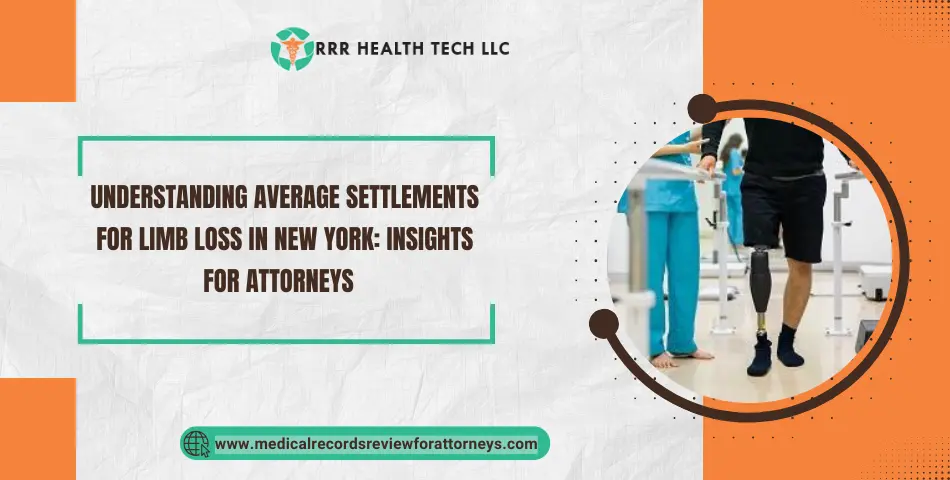
The consequences of limb loss can be devastating in both physically and psychologically. It could disrupt one’s lifestyle and pose challenges financially. In New York, the settlement amounts for amputations injuries vary from person to person, depending on the situation. The purpose of this write-up is to highlight the average settlements pertaining to limb amputations, analyze the impacts of medical record scrutinization, and suggest ways to maximize settlement compensation to the concerned parties.
Primary Determinants of Settlement Values
Level of Injury
– Partial and total amputation: Settlements tend to be higher for total amputations compared to partial amputations.
– Multiple Limb Loss: The greater number of amputations, the settlement amounts for the victim will tend to increase because his or her life drastically affected after the injuries.
Cause of the Injury
– Accident type: The location of the accident such as a construction site or a vehicle collision is crucial for estimating the liability and amount of settlement.
– Missed negligence: Adjusting the amount of negligence increases the compensation amount.
Medical Expenses
– Surgical expenses: Construction of new body parts along with physiotherapy and healing processes makes up a large proportion of the amount set for compensation.
On-going Care
• Review and consider all medical treatments and therapy required to be provided during the entire treatment duration.
Loss of Income and Earning Potential
• Impact on Employment: Compensatory damages need to be given for loss of wages and income potential in the case where employment cessation, or employment to a position with lower salary or less pay, is a direct result of the injury sustained.
Pain and Suffering
• Emotional and Physical Trauma: A settlement amount takes into consideration pain and grief suffered by the victim, thus the psychological trauma inflicted on him by the accident, and secondary damage.
Permanent Disability and Lifestyle Changes
• Adjustments Required: the ancillary expenses such as mobility aids, and on-going support dramatically raises the settlement amount.
Comparative Negligence
• New York’s Comparative Negligence Laws: In the event when the injured party is partially responsible for the accident, their settlement is likely to be adjusted for that degree of blame apportioned.
Typical Settlement Ranges for Amputation Cases in New York
Minor Amputations (Fingers or Toes)
• Settlement Range: Between $150,000 and $500,000.
• Factors Influencing Amount: The associated costs such as living the daily life, loss claiming cut off, and societal challenges presented due to the losing the finger are taken into account.
Limb loss (Hands, Arms, Feet, or Legs)
• Settlement Range: Between $500,000 and $5 million.
• Considerations: Aids made as prosthetics in the event when a working prospective individual loses function, earns income, or resignation to involuntary employment due method.
Severe or Multiple Limb loss
• Recommended Payout: In cases of multiple amputations due to circumstantial negligence awarded cases, the payout potential exceeds $10 million.
Product Liability Cases
• Settlement Figures: Ranges between $5-20 million.
• Details: Liable cases dealing with defective products also tend to carry additional damages.
Limb Loss Claims Associated with Construction Injuries
Amputee Causes in Construction
• Heavy Machinery: Crane, forklift, and other equipment operator accidents.
• Falls: Trauma inflicted by harsh amputating falls.
• Broken Tools: Tools lacking proper maintenance can result in horrifying physical damage.
Legal Rights of Employees
• New York Labor Laws: Sections 200, 240, and 241 grant exceptional benefits of compensating the injured workers and allows pursuit of damages outside worker’s compensation.
Impact of Workers’ Compensation on Amputation Settlements
Benefits of Workers’ Compensation
• Basis: It generally pays medical expenses and a percentage of wages lost.
• Non-Applicable: Claim does not apply for suffering, owing to compelling pain, so external claims must be made.
Claims against Employers
• Eligibility Criteria: If an employee or one of their family members suffers from an injury paid by a contractor or manufacturer hired by them, they are entitled to claims for additional payment.
The Use of Medical Record Reviews
Significance Relating to Lawyers
• Formation of Strong Cases: Detailed medical record reviews help support the claims and showcase the injuries suffered.
• Recognizing Pre-existing Conditions: Evaluating a previous medical history and its possible effects on the case.
Steps of Medical Record Review
• Acquisition of Records: The procedures required to obtain and analyse medical records.
• Reviewing Data: The most important step and factors to consider during evaluation.
Case Studies
Case Study 1: Amputation Due to Construction Site Accident
• Overview: A construction worker’s limb loss due to a piece of construction equipment malfunctioning.
• Challenges: Establishing the negligence case against the manufacturer of the equipment.
• Solutions: Expert testimony surrounding the medical equipment safety standards proved invaluable alongside intensive medical record analyses.
Case Study 2: Amputee Victim of a Car Accident
• Overview: A car ran over a pedestrian and the injury resulted in limb loss.
• Challenges: Blame the driver for negligent actions and the change of lifestyle for the victim.
• Solutions: Calcium bones showed injuries sustained and medical aid required so patient had immediate access for continual assistance.
Conclusion
It is crucial for attorneys representing clients in New York to grasp the relative settlement amounts for loss of limb cases. Legal practitioners will be able to assist their clients more effectively by taking into account the numerous aspects that determine settlement amount and value such as healthcare costs, psychological trauma, and the impact of medical document analysis. This guide outlines the numerous factors that limit a client’s settlement in order to aid legal representatives in formulating a better settlement strategy.