Introduction
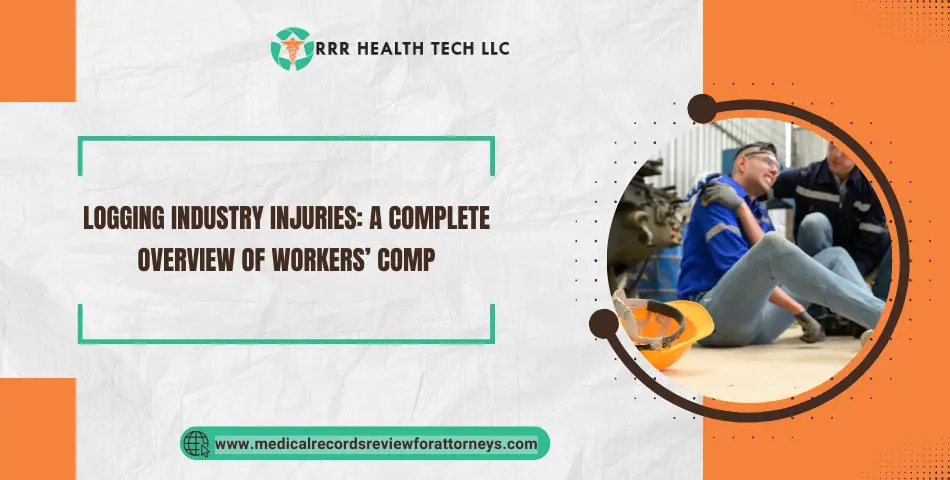
Compared to other sectors, the logging industry remains one of the most dangerous in the United States, exposing its workers to dangers on a daily basis. Injuries are common in this industry and have serious legal consequences. This article reviews the leading logging industry Injuries, the role of review of documents in this legal examination, and examines the way attorneys can manage such complex disputes.
Most Common Logging Industry Injuries in 2024
Fatal Injuries
Sadly, logging remains the industry with the highest rate of workplace deaths. The leading cause\s of logging fatalities are:
Tree Strikes and Falling Objects Workers getting smashed by falling trees, limbs, and other debris is the most common cause of logging deaths. These occurrences not only result in devastating head injuries, spinal cord injuries, and death, but are also exceptionally common.
Equipment-Related Fatalities Accidents that are related to heavy machinery including logging trucks, skidders, and processors are particularly dangerous and often result in fatalities. Within these types of incidents, there are often crushing injuries as well as entanglements.
Struck-by-Vehicle Accidents Workers are killed as a result of transportation, particularly in relation to logging vehicles and machinery, as they are struck and killed during operational movements or while walking between work locations.
Serious non-fatal injuries
Some common injuries resulting from accidents include internal injuries, broken bones, and head trauma. The range of non-fatal injuries that could result from logging includes:
Musculoskeletal Injuries
• Damage of the back and spine due to lifting large objects and performing repetitive tasks
• Injury to the shoulder and neck from chainsaw use
• Injury to the knee and ankle from rugged and uneven surfaces
Lacerations and Cuts
• Cuts and lacerations of the hands, arms, and legs from chainsaws
• Cuts from the use of various tools and equipment
• Deep surgical lacerations that require surgery
Traumatic Brain Injuries
• Head injuries from heavy objects such as tools and machines
• Long-term care head injuries of severe grade
• Long-term head injuries that impact earning potential due to cognitive abilities
Crush Injuries
• Hand and finger injuries resulting from the use of tools and equipment
• Chest and abdominal injuries from heavy machinery
• Lower extremity injuries like crush injuries from logs
Weather-Related Injuries
Adverse weather conditions expose workers to weather-related injuries such as hypothermia or hyperthermia. In addition, rain or snow may create hazardous working surfaces that result in more slip-and-fall injuries.
Legal Rights and Workers’ Compensation for Logging Industry Injuries
Understanding Workers’ Compensation Coverage
Logging Industry injuries, and, unlike other professions, have unique legal rights with regards to workers’ compensation. Each state has its own provisions under the workers compensation act which usually includes:
Medical Benefits
- Immediate attention for injuries sustained while working
- Ongoing medical attention and rehabilitation, if needed
- Medicines and medical gear needed
- Surgical and physical therapy, when warranted
Wage Replacement Benefits
- Temporary total disability benefits when the worker is unable to work
- Temporary partial disability benefits when the worker has reduced earning capacity
- Permanent partial disability benefits for the enduring changes the worker has disability compensation
- Life-altering injuries command permanent total disability benefits
Vocational Rehabilitation
- Job retraining programs for workers unable to return to logging
- Career change: Education support
- Assisted job placements
Third-Party Liability Claims
A logged injuries worker also has the right to claim third party compensation for:
- Defective equipment
- Unsafe working environment
- Negligent subcontractors
- Transportation related injuries
The Critical Role of Medical Records Review in Logging Industry Injuries Cases
Why Medical Documentation Matters
Claimed compensation benefits have a direct connection to the worker’s medical injury documents. Hence medical documents are extremely vital in the case of logging injury workers.
Medical records are critical in workers’ compensation cases since most insurance companies will request all records pertaining to the employee’s injury or illness.
Specialized injury-focused medical record review services assist the attorneys with:
In-Depth Analysis of Injuries
• Complete examination of emergency room records
• Review of diagnostic studies and other examinations
• Analysis of the protocols and outcomes related to the treatments provided
• Evaluation of the prognosis for the care to be provided post treatment
Chronological Medical History
• Development of timelines for the injury history
• Identification of any existing related medical conditions
• Identification of treatment noncompliance or absence of treatment for prolonged periods
• Establishing a nexus of workplace injuries with the medical findings
Expert Medical Opinions
• Medical assessments from third parties
• Expert review of the findings of the primary physician
• Assessment and determination over the claimed vocational capacity
• Planning for the care of the person with a lasting injury and other relevant issues
In What Ways Medical Record Review Services Augment Counsel
In workplace injury claims, medical record review services aid the attorneys. Such services aid with:
Preparation of the case and its files
• Arranging medical records in folders for easy retrieval for the case files
• Preparation of concise yet comprehensive medical summaries
• Establishing crucial medical information in the case files for the claims made
• Preparation of cases to be presented with medical timelines detailing the finding chronologies
Coordination of expert witnesses
• Obtaining the relevant medical experts
• Coordination of examinations not conducted by the primary physician
• Preparation for the testimony of the expert witnesses
• Analysis of medical opinions and reports from the experts for the defense
Support with settlements and trials
• Estimation of cost and relevant budgeting for medical procedures needed in the future
• Estimation and evaluation of the claim of enduring impairment and its severity.
• Creation of demonstrative materials for trial exhibits
• Assistance during court events and depositions
Case Studies
Case Study 1: Height-Related Fall Incident
Description: An employee in the logging industry suffered a fall while trying to secure a branch in a tree.
Challenges: The worker had multiple injuries and was battling with high medical costs. The employer denied responsibility, alleging the worker was not observing safety measures.
Solutions: An attorney was able to piece the treatment history and demonstrate the injuries suffered and the recovery process, which revealed both the injuries and the employer’s negligence in provision of safety equipment.
Case Study 2: Injuries Resulting From Equipment Use
Description: An employee experienced a deep cut due to a chainsaw that was not working properly.
Challenges: The case was further complicated by the involvement of the chainsaw’s manufacturer.
Solutions: The attorney was able to illustrate how the injuries and their complications had a lasting impact on the worker’s capacity to perform manual tasks by reviewing the medical records in detail.
Conclusion
Attorneys representing workers suffering injuries in the logging industry Injuries require deep knowledge of the industry to serve their clients well. Legal practitioners that use medical record review services are able to bolster case preparation for their clients and achieve better results. Legal advisors have to keep track of trends and current statistics of the logging industry for effective representation.
At RRR Health Tech, we help attorneys uncover the medical truths behind workplace injury claims. Our expert medical record review services transform chaotic, multi-provider documentation into structured, evidence-based reports supporting liability proof, expert testimony, and fair compensation.
Partner with us today to strengthen your logging industry injury litigation strategy!