Introduction
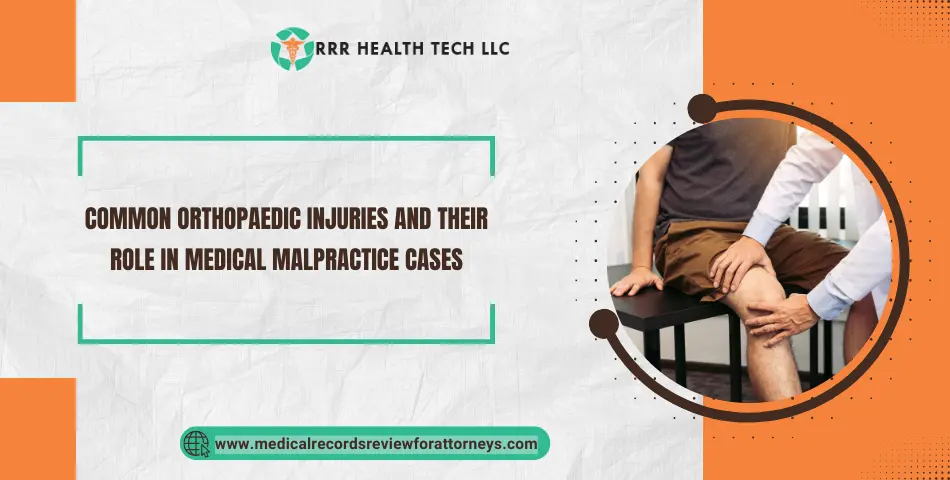
Orthopaedic injuries is one of the paramount concerns in medical professions since these practice areas sometimes lead to causing medical injuries which may result in malpractice cases. In cases where such malpractice is being dealt with, it is important to know more about orthopedic injuries, their consequences and the effective way to conduct a medical record examination in case of the possibility of malpractice. This article addresses the most prevalent types of orthopaedic injuries, the possibility of malpractice occurrence and the role of medical records review services in the success of your case.
What Are Orthopaedic Injuries?
Skeletal muscular injuries are termed as orthopaedic injuries and these include a wide range of factors that may include the bones, the joint (or joints), ligaments, tendons and muscles. Such pathologies may be caused by trauma, overuse and degenerative diseases. The insight concerning these specific types of injuries is usually very important especially to the lawyers assessing the cases of possible malpractice.
Common Types of Orthopaedic Injuries
Fractures
• Overview: Fractures occur when the bone is broken or cracks under such impact forces which may arise from a tumble, an accident or during a sport activity.
• Types: Simple, compound and stress fractures.
• Malpractice Risks: Situations such as misdiagnosis, improper medication, or even non attendancies can be detrimental thus leading to irreversible complications.
Sprains and Strains
• Overview: Ligaments are sprains while muscles and/or tendons are affected by strains.
• Causes: Sprains and strains usually happen as a result of active physical engagements or from accidents.
• Malpractice Risks: Failure to follow evaluation techniques or flaws in rehabilitation techniques.
Tendon Injuries
• Overview: Tendon injuries can range from tendonitis to ruptures and can restrict one’s ability to move certain areas.
• Common Types: Patellar tendon or Achilles tendon rupture, rotator cuff injuries.
• Malpractice Risks: There is a possibility of unnoticed diagnosis or delayed surgical interventions.
Dislocations
• Overview: Dislocation can simply be described as moving the bones that form a joint from its original location.
• Common Sites: Shoulders, knees, fingers and their joints.
• Malpractice Risks: Not detecting a dislocated joint may result into chronic pain and a likely joint instability.
Cartilage Injuries
• Overview: Damage to cartilage may be traumatic in origin or degenerative in nature.
• Common Conditions: A tear of the meniscus from the knee region is one of the common injuries.
• Malpractice Risks: Negligence of the condition can result into arthritis or other related problems in joints.
Bursitis
• Overview: The bursae are al fluid filled sacs that collapse during movement in order to protect the joint from friction and injury; the case of bursitis is the swelling of the bursa with fluid.
• Common Causes: Repetitive motion in a particular area or excessive pressure applied.
• Malpractice Risks: Failure to deal with the aggravating causes of the condition will make the condition progressively worse.
Osteoarthritis
• Overview: Osteoarthritis or degenerative joint disorder may be depicted as a disease that breaks down joint tissues. It subsequently leads to loss of function and or chronic pain in that joint.
• Risk Factors: Aging, overweight people and people who have sustained injury are at risk.
• Malpractice Risks: Poor management of one’s pain, or no referrals done to the specialists.
Compartment Syndrome
• Overview: A potentially life-threatening circumstance when the pressure inside the muscles rises to extreme levels.
• Causes: Result of excessive trauma, fractures, or even tight binding of the muscles.
• Malpractice Risks: If diagnostic measures are delayed there is a risk of permanent injury within the muscles.
Stress Fractures
• Overview: A general term for small cracks that occur in the bones as a result of high levels of stress or chronic use.
• Common in Athletes: Mostly the runners and dancers.
• Malpractice Risks: The chances of treating it as a soft tissue injury may cause a delay in its treatment.
Pediatric Orthopedic Injuries
• Overview: Due to their under developing bones, kids thus sustain different types of orthopedic injuries.
• Common Issues: Fracture of growth plates, congenital abnormalities.
• Malpractice Risks: Proper assessment of issues related to growth of the body parts can prevent chronic problems.
The Intersection of Orthopaedic Injuries and Medical Malpractice
Understanding Medical Malpractice
Medical malpractice occurs when a healthcare professional fails to provide the standard of care, resulting in harm to the patient. In orthopedic cases, this can manifest in various ways, including:
- Misdiagnosis or delayed diagnosis of injuries.
- Inadequate treatment plans or follow-up care.
- Surgical errors or complications due to negligence.
How Medical Record Reviews Can Aid Attorneys
Medical record reviews are essential in building a strong malpractice case. They provide a comprehensive analysis of the patient’s medical history, treatment protocols, and outcomes. Here’s how our medical record review services can assist attorneys:
Identifying Negligence
A thorough review can uncover discrepancies in the medical care provided, supporting claims of negligence.
Establishing Causation
We help attorneys demonstrate how inadequate care directly led to the patient’s injuries or worsening condition.
Expert Testimony Support
Our detailed reports can serve as a foundation for expert witness testimony, reinforcing the case in court
Documenting Treatment Protocols
We provide a clear timeline of treatment, highlighting any deviations from standard practices that may have contributed to the injury.
Analyzing Outcomes
By evaluating the results of treatments, we can help attorneys argue whether the outcomes were reasonable given the circumstances.
Case Studies
Case Study 1: Misdiagnosed Fracture
Overview of the Case: A 35 year old male who fell has pain on his wrist, reports pain in his wrist. On follow-up, Xray images did not show any significant findings subsequently he was given analgesics and dismissed from the hospital.
Challenges: The patient came back approximately two months later reporting increased unilateral pain and swelling over the knee joint. Subsequent follow up with the X-ray indicated a still unhealed fracture but better aligned than before.
Solutions: A case of the absence of examination and treatment follow ups was discovered. This helped the attorney argue negligence on part of the healthcare providers.
Case Study 2: Surgical Error in Knee Reconstruction
Overview of the Case: Meniscus tear was the reason of a 50-year-old woman for a knee surgery. The outcomes were bad and morbid, though there was an underline injury that nearly all surgeons were not able to treat.
Challenges: The analysis of rendered surgical operations’ medical records displayed complete neglect of infection’s preventive measures by the surgeon during the operative stage.
Solutions: The attorney used the obtained evidence and turned to the court demonstrating standard practice violations craftily.
Conclusion
Attorneys must possess a background in orthopedic medicine with respect to neglected orthopaedic injuries in medical malpractice claims. No matter how strong a case may appear to be for an attorney, with the assist of medical record review services, an attorney is able to make substantial improvements to the case strategy. Legal practice concerning medical negligence is constantly developing and, therefore, resources and information must be used appropriately to facilitate efficient and effective results.
Every orthopedic malpractice case deserves clarity, not complexity!
Our Medical Record Review Services transform intricate medical data into clear, actionable summaries that help attorneys prove negligence and secure fair settlements!
Partner with RRR Health Tech, where medical expertise meets legal precision!