Introduction
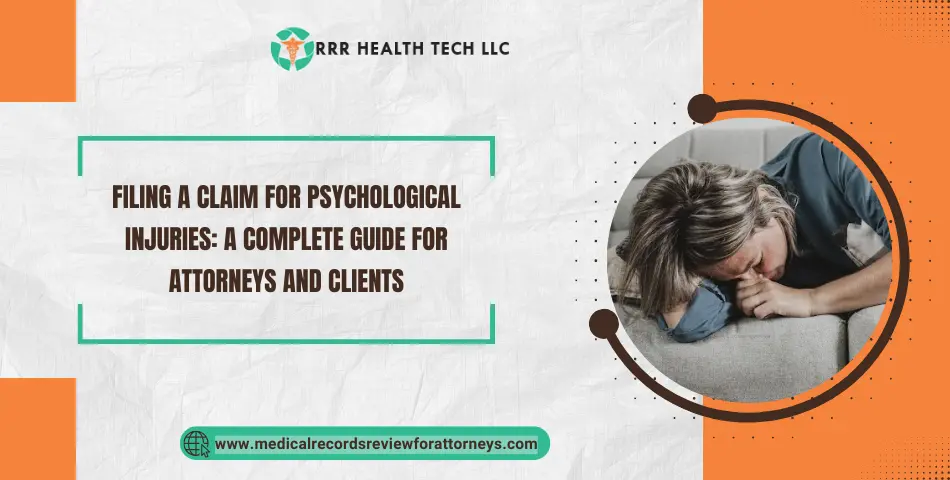
Psychological injuries, like PTSD and emotional distress, are some of the most challenging incapacities to bear. They often stem from traumas such as accidents, workplace violence, and assaults, which, very deeply, impact the victim’s life. Clients and attorneys need to know the steps to lodge a claim. This article attempts to break down the claim process, the important role of medical record reviews, and provide insightful ways to improve one’s approach.
Understanding Psychological Injuries
Definition and Types
• Post-Traumatic Stress Disorder (PTSD): A mental health condition resulting from experiencing or witnessing an extremely traumatic event.
• Emotional Distress: A form of psychological trauma that can result from numerous factors including accidents and bullying.
Symptoms
• Anxiety and depression
• Flashbacks and nightmares
• Social withdrawal
• Difficulty concentrating
Legal Framework for Claims
Relevant Laws
• Personal injury law: Relates to claims concerning an individual’s psychological injury as a result of negligence or intentional injury.
• Workers’ Compensation: Benefits for employees who suffer psychological injuries due to their employment.
To Prove You’re Case:
• ‘Negligence:’ The corresponding blame is assigned to show the reasonable person standard was not met.
• Causation: Link between the trauma and psychological pain must be proven.
The Contribution of Medical Records towards Claims
Importance for Legal Representatives
• Evidence Of Injury: Medical records also offers evidence of the treatment of psychological disorders.
• Establishing Credibility: Relevant claims may be substantiated and arguments made much stronger by presenting a well-crafted medical history.
How We Make an Attorney’s Job Easier
• Thorough Review: Medical record review services make it possible for attorneys to spot relevant pieces of information and gaps in the medical documentation.
• Expert Analysis: Our contribution can broaden perspectives and subsequently deepen the understanding of psychological injuries and their ramifications.
Procedure for Making a Claim
- Engage A Therapist: Visit a mental health professional to get a suitable treatment and diagnosis.
- Keep Comprehensive Records: Document the symptoms, treatment, and the effect of the injury on your everyday activities.
- Inform The At-Fault Party: Update the party accountable for the injury about your claim.
- Engage The Services Of An Attorney: Get legal counsel about your entitlement and viability.
- Submit The Claim: Prepare and submit the required documents to the relevant legal body.
Most Predominant Challenges Relating To Psychological Injuries Claims
Demonstrating the Injury
• Psychological injuries tend to require more time to be recognized when placed alongside other visceral wounds, which invariably makes them quite difficult to substantiate.
Reducing Stigma
• The societal stigma linked with mental health might impact how claims are perceived.
Managing Legal Issues
• The intricacies associated with personal injury and workers’ compensation laws can be complex.
Case Study
Case Study 1: Workplace Trauma
Overview: PTSD was diagnosed in an employee after witnessing an accident in the workplace.
Challenges: Proving causation between traumatic event and psychological injury.
Solutions: Medical records, especially those revealing the treatment’s diagnosis, were fetched to ensure an effective treatment plan.
Compensation: The claimant was compensated for medical treatment, alongside reimbursement for work absence.
Case Study 2: Assault Victim
Overview: One of the victims of the assault sought compensation for emotional distress caused due to the incident.
Challenges: Claiming emotional distress needs an expert to explain the profound severity, which is challenging at times.
Solutions: Claim was well-supported with expert testimonies alongside thorough medical files.
Compensation: Victim was granted reimbursement for therapy costs alongside emotional discomfort.
Conclusion
Claiming damages regarding psychological trauma is a difficult path to follow, but knowing the legal structure, along with the medical documentation, step by step, can assist the client and their lawyer equally. There are many challenges to overcome with the help of this guide concerning psychological injuries claims bolsters your approach with actionable steps.